🌟 Introduction
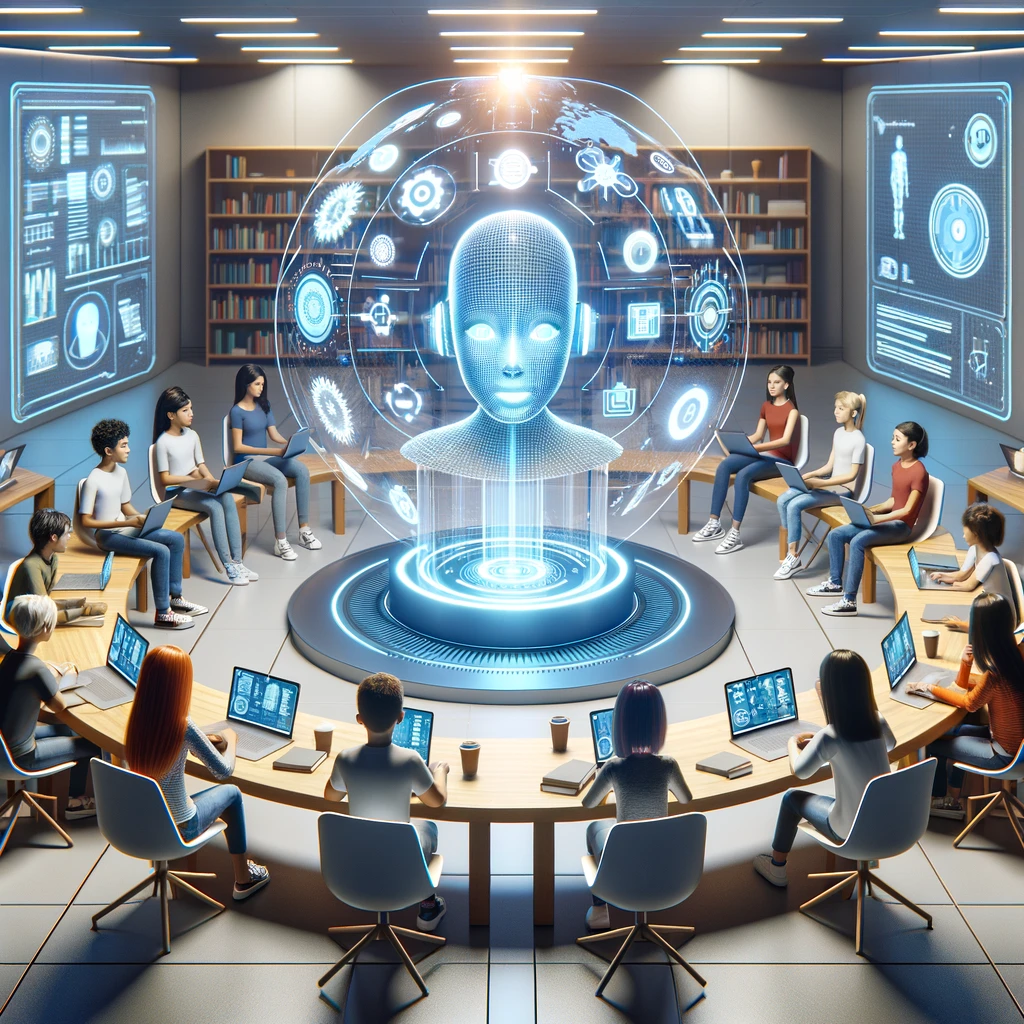
In a world increasingly reliant on technology, the use of chatbots in education has become not just an innovation, but a necessity. These smart tools significantly enhance the educational process by providing personalized and interactive learning experiences. In this article, we will explore how chatbot services contribute to education and how educational institutions can leverage them to achieve their learning and marketing objectives.
📚 Key Benefits of Chatbot Services in Education
Chatbot technology opens new horizons in the world of education, making the learning process more dynamic, interactive, and personal. Here are some of the main benefits of using chatbot services in education, with more in-depth details:
🕒 24/7 Availability: Chatbots Illuminate the Path to Learning Non-Stop
In a fast-paced and dynamic world, the 24/7 availability of chatbot services is an indispensable advantage in the educational process. These smart tools offer assistance to students at any time of day or night, breaking down time barriers that might hinder learning. Let's delve deeper into how continuous availability enhances the effectiveness of education:
- 🌍 Global Access: Regardless of the time zone students are in, chatbot services provide uninterrupted support and guidance. This makes education accessible to everyone, everywhere, at any time, supporting the concept of global learning.
- ⏰ Instant Responses: In a time where time is highly valued, chatbots provide immediate answers to student inquiries and questions. This reduces the waiting periods students spend seeking support, allowing them to progress efficiently and effectively on their educational journey.
- 🌙 Catering to Night Owls: Some students prefer to study at night, where there is quiet and focus. Chatbots meet the needs of these students by providing a constant source of information and support, making learning possible at times traditionally considered unconventional for education.
- 🔄 Continuous Updates: The role of chatbots is not limited to answering questions; it also includes providing updated and reliable information. This ensures that students receive the latest data and information essential for their education, enhancing learning quality and keeping it abreast of modern developments.
- 💡 Inspiration Anytime: Sometimes, inspiration and enthusiasm for learning come at unexpected times. Chatbots provide the necessary support to transform this enthusiasm into effective and productive learning, whether it's in the afternoon or the early morning hours.
🎨 Personalizing the Learning Experience: Chatbots Make Every Educational Journey Unique
Personalization is at the heart of the modern learning experience, and chatbots play a pivotal role in making this a reality for every student. By employing artificial intelligence and machine learning technologies, chatbots offer a tailored educational experience designed to meet the unique needs and goals of each individual. Here's how this is achieved:
- 🔍 Deep Analysis of Student Needs: Chatbots begin by collecting and analyzing data about student preferences, learning styles, and academic progress. This includes tracking answers, interactions, and even difficulties students face, providing a precise understanding of what they need to achieve the best results.
- 📚 Customized Content for Every Student: Based on detailed analysis, chatbots deliver personalized educational content that aligns with each student's level and interests. Whether through specially designed lessons, customized exercises, or additional learning resources, all aim to enhance student comprehension and help them succeed.
- 💡 Individual Guidance and Tailored Advice: Chatbots don't just provide educational content; they also offer individual guidance and personalized advice to each student. By providing recommendations for performance improvement or tips for tackling difficult subjects, chatbots become a personal mentor for every student on their learning journey.
- 🌱 Continuous Evolution and Renewed Learning: Personalization is not a one-time process but an ongoing one. Chatbots continuously update and adjust educational content and guidance based on each student's ongoing progress and development. This ensures that the learning experience remains relevant and stimulating, encouraging continuous learning and personal growth.
- 🎓 Inclusive Learning Environment: By personalizing the learning experience, chatbots make education more inclusive and accessible. Every student, regardless of their abilities or background, can access educational content that meets their specific needs and supports their academic and personal development.
🌟 Continuous Learning Support: Chatbots as a Constant Guide in the Educational Journey
In the unending journey of learning, the role of chatbots stands out as an unfailing source of support, providing students with a constant guide that assists them every step of the way. Let's look at how chatbots become the ideal ally for every student striving for success:
- 📚 24/7 Access to Educational Resources: Chatbots offer unlimited access to educational resources, whether written lessons, educational videos, or useful articles. Students can inquire and obtain the information they need simply by asking, which enhances their independence and encourages self-directed learning and research.
- 💡 Ongoing Guidance and Personalized Support: Thanks to advanced technologies, chatbots can provide customized advice and guidance based on each student's individual progress and needs. From advising on course selection to offering effective learning strategies, chatbots become a reliable mentor for students in achieving their academic goals.
- 🔄 Continuous Information and Content Updates: In a rapidly changing world, chatbots ensure that students receive the latest information and educational resources. Through continuous updates, students stay current with developments in their fields of study, enhancing the quality of their education and improving their chances of success.
- 🎯 Progress Tracking and Feedback Provision: The role of chatbots is not limited to providing information; it also includes tracking student progress and offering constructive feedback. By analyzing answers and performance in tests and exercises, chatbots provide personalized recommendations for improving performance and addressing weaknesses.
- 🌱 Fostering Continuous Growth and Development: With chatbot support, students are encouraged to adopt a growth mindset and always strive for improvement and development. By providing opportunities for self-learning and experimentation, chatbots help students develop new skills and deepen their understanding of course materials.
📈 Educational Management Efficiency: Chatbots Redefine Resource and Operations Management
Improving educational management efficiency is a significant challenge in the modern educational system. However, chatbots offer smart solutions that redefine how educational institutions manage their resources and operations, providing a more effective and responsive learning environment. Let's explore how chatbots contribute to achieving this efficiency:
- 🚀 Automating Administrative Procedures: Chatbots facilitate the automation of a wide range of administrative tasks, from registrations and course inquiries to class scheduling and absence management. This significantly reduces the need for human resources to perform these tasks, saving time and increasing accuracy and efficiency.
- 💡 Enhancing Communication Between Administration and Students: By providing an immediate and effective communication channel, chatbots help foster communication between educational administration and students. This ensures a smooth and timely flow of information, reducing misunderstandings and promoting transparency.
- 🔄 Reducing Administrative Errors: Thanks to their accuracy and ability to handle large volumes of data without fatigue or error, chatbots reduce administrative errors that can occur due to manual processing. This enhances the quality of administrative services and improves student and staff satisfaction.
- 📊 Data Analysis for Informed Decisions: Chatbots can collect and analyze data about student interactions and progress, providing educational administration with valuable insights that can be used to make strategic decisions to improve the educational process and develop programs.
- 🌍 Efficient Resource Management: By optimizing resource allocation and class scheduling, chatbots contribute to utilizing educational resources in the most efficient ways. This ensures maximum benefit from available capabilities and enhances the financial and environmental sustainability of educational institutions.
🌍 Accessible Education for All: Chatbots Break Barriers and Open Doors to Knowledge
In the pursuit of inclusive and equitable education, chatbots make invaluable contributions to making education more accessible to everyone, regardless of cultural, economic, or geographical background. Let's delve into how chatbots help make knowledge readily available to every individual:
- 🔓 Opening Doors for Learners from All Backgrounds: Chatbots remove many obstacles to accessing education, such as financial and geographical limitations. By providing digital educational resources accessible from anywhere, it becomes easier for learners worldwide to access quality education.
- ♿ Supporting Inclusive Education: Chatbots offer special support for learners with special needs by providing accessible and interactive content that accommodates their unique requirements. Whether through sign language content, readable text for the visually impaired, or interactive adjustments tailored to their needs, chatbots ensure that education becomes possible for everyone.
- 💬 Overcoming Language Barriers: Chatbots facilitate learning for learners speaking different languages by providing multilingual educational content. This helps ensure that language is no longer a barrier to accessing knowledge and quality education.
- 🌐 Enhancing Access to Education in Remote Areas: Chatbots can provide educational support even in the most remote and distant areas, where access to traditional educational institutions is difficult. By using mobile devices and internet connectivity, learners in these areas can benefit from self-directed and interactive learning opportunities.
- 📖 Providing Diverse and Rich Educational Resources: Chatbots offer a wide range of educational resources that suit various learning styles and preferences, making learning more engaging and effective for a broad spectrum of learners.
🎨 Personalized Learning Experiences: Chatbots Create Unique Educational Paths for Every Learner
In the modern educational landscape, personalization is a crucial factor for enhancing learning effectiveness and making it more relevant and engaging for students. Chatbots play a pivotal role in achieving this goal, providing customized learning experiences that meet the individual needs and preferences of each learner. Let's explore how chatbots work to create a specially designed learning environment:
- 🔍 Deep Learner Understanding: Chatbots use AI technologies to collect data about each student's learning patterns, interests, and performance level. Through precise analysis of this data, chatbots can identify individual needs and learning preferences, allowing for the delivery of educational content that better suits each learner.
- 📚 Customized Educational Content: Based on the derived analyses, chatbots develop and deliver personalized educational content that meets individual needs and goals. Whether by adapting material difficulty, providing diverse learning resources, or offering interactive exercises, chatbots ensure that every learner receives an optimal educational experience tailored to them.
- 💡 Personal Guidance and Reinforcements: Chatbots provide personal guidance and motivational reinforcements based on each student's progress. By offering customized advice and continuous encouragement, chatbots help students stay motivated and committed to their educational goals.
- 🔄 Flexible Adjustment of the Learning Path: Chatbots have the ability to flexibly adjust learning paths in response to changes in student performance and preferences. This ensures that the learning experience remains relevant and challenging, fostering continuous learning and personal growth.
- 🌐 Building a Supportive and Integrated Learning Environment: By providing customized content and individual guidance, chatbots help build a learning environment that supports the development of each student. Learners are encouraged to explore new areas of knowledge, develop new skills, and deepen their understanding of specific topics.
🤖 Applications of Chatbots in Education: Radical Transformations Towards Interactive Learning
Chatbots are a fundamental pillar in bringing about radical transformations in the modern educational landscape. By offering interactive, personalized, and 24/7 accessible learning experiences, this technology expands the traditional boundaries of learning and teaching. Let's explore the many applications of chatbots that are reshaping the educational process:
- 📚 Providing Academic Assistance: Chatbots act as virtual teachers, offering academic support to students across various subjects. From explaining complex concepts to providing and correcting practice exercises, these tools enhance student comprehension and stimulate continuous learning.
- 💡 Personalizing Learning Experiences: Chatbots use data gathered from student interactions to provide a customized learning experience. They can adjust the difficulty of materials, offer additional resources based on student interests, and present unique learning paths that match each student's learning pace.
- 🗣 Enhancing Language Skills: Chatbots are increasingly used to help students learn new languages, by providing interactive conversations and language exercises. Students can practice reading, writing, listening, and speaking in an enjoyable and non-intimidating way.
- 🎓 Managing Student Affairs: Chatbots automate many administrative processes such as registration, schedule inquiries, and academic performance tracking. This contributes to improving the student experience and reducing the administrative burden on staff.
- 🌐 Fostering Social and Collaborative Learning: By providing platforms for interaction and discussion among students, chatbots contribute to enhancing social learning. Students can collaborate on group projects, exchange knowledge, and improve communication and teamwork skills.
- 🎉 Offering Guidance and Counseling: In addition to academic support, chatbots provide personal and career guidance to students, helping them plan their educational and professional future. They can offer information on job opportunities, course requirements, and tips for developing life skills.
📈 Impact of Chatbots on Education Marketing: A Gateway to Innovative Educational Experiences
In a world of intense competition among educational institutions, chatbots emerge as a powerful marketing tool reshaping how these institutions communicate with prospective students and offer their educational services. By providing interactive, informative, and personalized experiences, chatbots can enhance brand awareness and build sustainable relationships with students. Let's explore some key aspects of the impact of chatbots on education marketing:
- 🌟 Boosting Awareness of Educational Programs: Chatbots can provide comprehensive and updated information about educational programs, courses, and events in an interactive and engaging manner. Through instant responses and customized content, it becomes easier for prospective students to explore available educational opportunities and make informed decisions about their academic future.
- 💬 Improving Interaction with Prospective Students: Chatbots provide a direct and effective communication channel with interested students, allowing for immediate responses to their inquiries and concerns. This personalized interaction enhances trust in the educational institution and improves conversion rates from mere interest to actual enrollment.
- 📊 Data Collection and Interest Analysis: Chatbots can collect valuable data about the interests and preferences of prospective students, helping educational institutions refine their marketing strategies and tailor their offerings to better meet market needs.
- 🚀 Accelerating the Registration and Admission Process: By simplifying information gathering and providing necessary guidance to complete admission applications, chatbots contribute to speeding up and facilitating the registration process. Students can easily get help filling out forms, understanding admission requirements, and tracking their application status.
- 👥 Building Strong Relationships with Students: Through continuous interactions and personalized support, chatbots help build a positive and lasting relationship between educational institutions and students. This fosters a sense of belonging and loyalty towards the institution, enhancing its reputation and encouraging positive recommendations.
🚧 Obstacles to Using Chatbot Services in Education: Challenges and Solutions
Despite the immense benefits offered by chatbot services in education, there are some obstacles and challenges that may prevent their full utilization. These challenges require innovative solutions to ensure maximum benefit from this technology in the educational process. Let's review some of these obstacles and possible ways to overcome them:
- ⚠️ Privacy and Data Security Issues: The use of chatbots in education raises concerns about protecting students' personal data.
- 🛡 Solution: Implement strict privacy and security standards, such as encryption and compliance with international laws like GDPR, to ensure the protection of student data.
- 👩💻 Over-reliance on Technology: The use of chatbots might reduce human interaction in the educational process, affecting the quality of education.
- 🤝 Solution: Integrate chatbots with personalized teaching and direct communication between teachers and students to maintain a balance between self-learning and human guidance.
- 📚 Limited Responses and Inability to Handle Complex Queries:
- 🔄 Solution: Continuously develop chatbots to improve their linguistic and cognitive abilities, and provide an option to escalate complex queries to human staff when necessary.
- 🌐 Integration Challenges with Existing Educational Systems:
- 🛠 Solution: Design chatbots to be compatible with existing educational systems and facilitate the integration process through flexible and customizable Application Programming Interfaces (APIs).
- 💡 Lack of Awareness and Training on Chatbot Use:
- 🎓 Solution: Provide training programs and workshops for teachers and students to increase awareness of how to effectively use chatbots and leverage all their advantages.
💡 Cost-Effective Solutions: How Chatbots Make Education More Financially Efficient
Amidst the financial challenges facing many educational institutions today, chatbot solutions emerge as an innovative means to enhance operational efficiency and reduce costs. Through automation and personalization, chatbots can provide valuable resources that contribute to improving education quality at a lower cost. Let's explore how chatbots achieve this cost-effectiveness:
- 🔄 Automating Educational and Administrative Processes: Chatbots reduce the need for manual labor and human resources by automating routine tasks such as registration, answering inquiries, and managing schedules.
- 📉 Result: Reduced administrative costs and increased efficiency, allowing staff to focus on higher-value tasks.
- 💬 Enhancing Student Communication: Chatbots provide an immediate and continuous communication channel with students, reducing the need for dedicated student support resources and enhancing the student experience.
- 📊 Result: Improved student satisfaction and retention, which reduces the costs of attracting new students.
- 📚 Providing Diverse Educational Resources: Through chatbots, dynamic and personalized educational resources can be provided without the need for significant expenditure on physical or traditional educational materials.
- 📈 Result: Enhanced learning experience and better outcomes at a lower cost.
- 🌍 Expanding Access to Education: Chatbots facilitate access to quality education for students from different regions, including remote areas, without the need for travel and accommodation costs.
- 🚀 Result: Increased enrollment in educational programs and improved return on investment for educational institutions.
- 📉 Reducing Development and Maintenance Costs: In the long run, chatbots can provide sustainable and scalable services at lower costs compared to traditional systems and staff.
- 🛠 Result: An initial investment in chatbot technology leads to significant savings in operational and administrative costs over the long term.
🤔 Frequently Asked Questions About the Benefits of Using Chatbots in Education: Comprehensive Answers to Common Queries
In an era of increasing reliance on technology in all aspects of life, including education, chatbots stand out as revolutionary tools promising to transform the educational process. However, this technology may raise many questions and inquiries. Let's explore some common questions about the benefits of using chatbots in education and provide comprehensive answers:
- ❓ How can chatbots improve the student learning experience?
- 🌟 Answer: Chatbots enhance the learning experience by providing immediate and personalized assistance to each student. They can offer detailed explanations, answers to questions, and interactive exercises tailored to each learner's level and needs. This makes education more interactive and personal.
- ❓ Can chatbots provide 24/7 support?
- 🕒 Answer: Yes, one of the most prominent benefits of chatbots is their ability to provide uninterrupted support and assistance around the clock. This means students can get help at any time, whether during late-night hours or on weekends.
- ❓ Do chatbots contribute to personalizing education?
- 🎨 Answer: Absolutely, chatbots use data and interactions to understand each student's needs and preferences. Through this understanding, they provide customized educational content and exercises that suit each learner individually, enhancing learning effectiveness and making it more enjoyable and engaging.
- ❓ Is using chatbots in education cost-effective?
- 💰 Answer: Yes, using chatbots in education is considered a cost-effective solution compared to traditional methods. It reduces the need for extensive human resources and saves educational institutions support and administrative costs, while improving the quality and accessibility of education.
- ❓ How easy is it to integrate chatbots into existing educational systems?
- 🛠 Answer: Integrating chatbots into educational systems requires some planning and implementation, but many chatbots are designed to be compatible with existing systems and provide Application Programming Interfaces (APIs) to facilitate the integration process. This makes them adaptable to various educational environments without requiring radical changes.
🎁 Conclusion
Chatbots offer unprecedented opportunities to enhance education and make it more interactive and enriching. By overcoming obstacles and strategically adopting this technology, educational institutions can achieve tangible results that contribute to improving the learning experience and realizing their educational and marketing goals.