
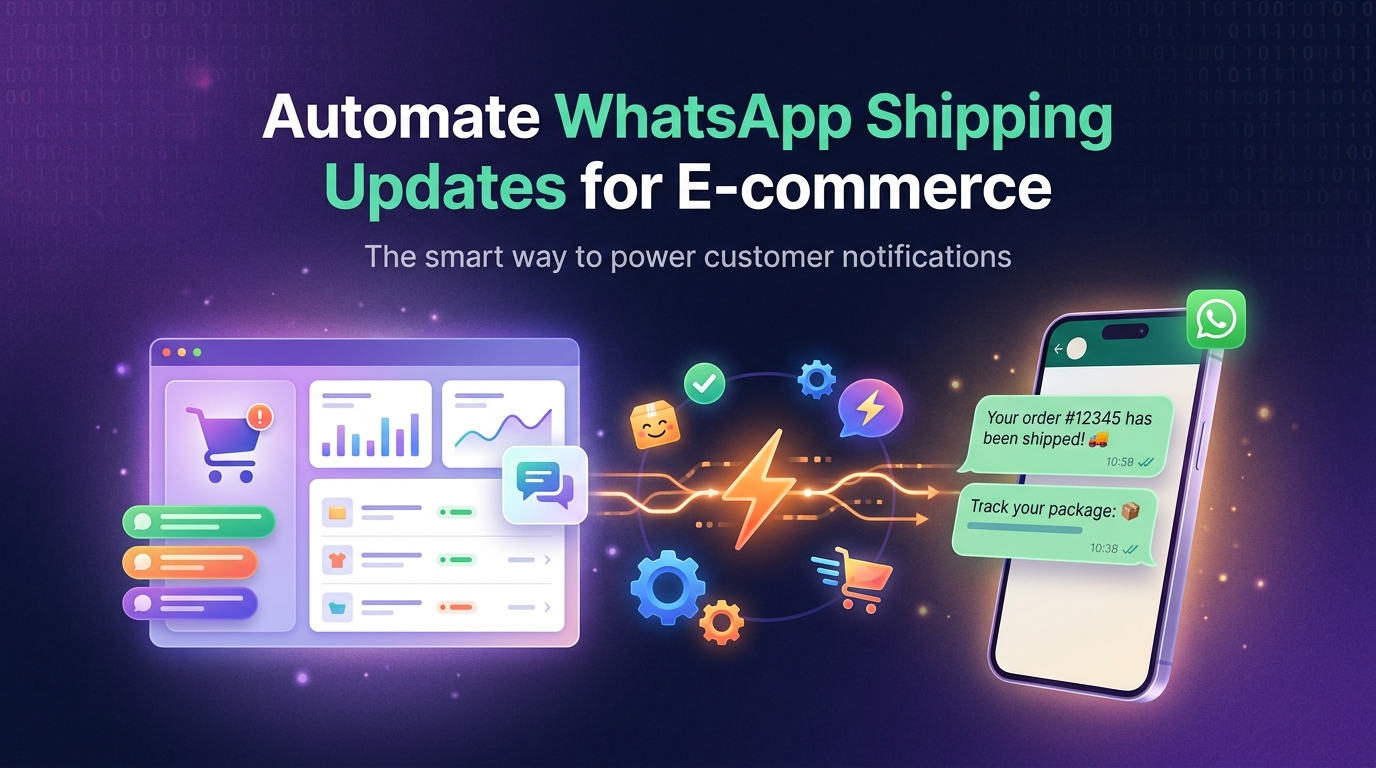
Have you ever ordered a product online and then spent days wondering where it was? This feeling of anticipation and anxiety is what thousands of customers in the Middle East and North Africa (MENA) region face daily, especially with the increasing reliance on e-commerce. In a market where expectations are accelerating and competition is fierce, sending shipping updates is no longer just an added feature; it has become a crucial necessity for the success of any online store. But did you know that you can transform this challenging and time-consuming process into a seamless and delightful experience for your customers, without any manual intervention? This is precisely what WhatsApp shipping automation offers you.
Why Is WhatsApp Shipping Automation a Necessity for E-commerce Today?
In this fast-paced era, customers expect transparency and instant communication at every step of their purchase journey. Imagine your customer ordering their favorite product, then waiting days without any updates – would they feel confident? Most likely not. The answer lies in automation's ability to bridge this gap. When we talk about WhatsApp shipping automation, we're referring to a system that sends instant, personalized updates to your customers as soon as their order status changes, from order confirmation to final delivery.
This not only enhances the customer experience but also significantly reduces the immense burden on your customer service team. Instead of responding to hundreds of repetitive "Where is my order?" inquiries, your team can focus on more complex issues and value-added tasks. Platforms like Let's Bot, an official Meta Business Partner, enable e-commerce stores to leverage the official WhatsApp Business API to connect their logistics systems directly to their customers' preferred communication channels in the region.
Furthermore, this automation contributes to building a strong relationship of trust and loyalty with customers. When customers feel consistently informed and that the store cares about their experience even after the purchase is complete, they are more likely to return for more purchases and become advocates for your brand. This shift from a mere transaction to a comprehensive experience is what distinguishes successful e-commerce stores today.
Key Benefits of Automating Shipping Updates via WhatsApp
The benefits of automating shipping updates go beyond merely sending messages. It's a comprehensive strategy that reshapes how e-commerce stores interact with their customers, delivering real value on multiple levels. Here are the most prominent benefits:
- Improved Customer Satisfaction: Receiving instant updates on shipping status reduces customer anxiety and increases their sense of trust and comfort, leading to a positive buying experience.
- Reduced Workload for Support Teams: With automated updates, the number of repetitive inquiries about order status significantly decreases, allowing your customer service team to focus on more complex issues.
- Increased Operational Efficiency: Automation allows you to save time and resources that were previously wasted on manual updates, thereby improving your store's internal operational efficiency.
- Builds Brand Trust and Loyalty: Transparency and continuous communication build bridges of trust between the store and its customers, encouraging repeat purchases and long-term loyalty.
- Enhanced Conversion Rates: Shipping updates can be used as an opportunity to re-engage customers, such as suggesting complementary products or offering special deals, contributing to increased sales.
- Seamless Integration: Platforms like Let's Bot offer seamless integration with popular e-commerce platforms such as Salla, Zid, and WooCommerce, making it easy to connect and start automation effortlessly.
Imagine how different the customer experience can be when they receive a WhatsApp notification confirming their order, then another informing them that the shipment is on its way, and a third confirming delivery. This level of e-commerce customer service is truly unforgettable.
How Does WhatsApp Shipping Automation Work with Let's Bot Platform?
Let's Bot is a comprehensive solution specifically designed to meet the e-commerce needs in the MENA region, making WhatsApp shipping automation easy and effective. This automation relies on the smart connection between your online store and the WhatsApp Business API.
Steps for Shipping Automation via Let's Bot:
- Connect to Your E-commerce Store: First, your online store (whether on Salla, Zid, WooCommerce, or others) is linked with the complete Let's Bot platform. This integration ensures the real-time flow of order data and shipping statuses.
- Set Up Message Templates: You create ready-to-use WhatsApp message templates, approved by Meta, for each shipping stage (e.g., order confirmation, shipping, delivery). These templates can be customized with customer and order data (such as name, order number, tracking number).
- Define Triggers: You set specific "triggers." For example, when an order status in your store changes from "Processing" to "Shipped," a WhatsApp message is automatically activated.
- Automatic Message Sending: Once the trigger is activated, the Let's Bot platform sends the appropriate message to the relevant customer via WhatsApp, including all necessary details. These messages can be sent individually or as part of bulk messaging campaigns to a large number of customers.
Let's Bot ensures that this process is secure and compliant with the highest privacy standards, in addition to providing multiple payment options and supporting invoices in local currencies (SAR, AED, EGP, KWD, QAR, BHD). All of this comes with 24/7 Arabic technical support to assist you at every step.
Types of Shipping Updates You Can Automate
With WhatsApp shipping automation, you can cover every stage of the customer journey after purchase, ensuring complete transparency and peace of mind. Here are the main types of e-commerce order updates you can automate:
- Order Confirmation: An instant message after purchase to confirm receipt of the order and its details, reassuring the customer and reducing order cancellations.
- Shipping Confirmation: A notification informing the customer that their order has been shipped, including the tracking number and a link to track the shipment directly.
- In-Transit Updates: Messages informing the customer about changes in their shipment status, such as "Your shipment has arrived at the sorting center" or "Your shipment is out for delivery."
- Delivery Confirmation: A notification confirming successful delivery of the order, which can include a request to rate the product or the store.
- Delay Alerts: In case of any unexpected delay, the customer is immediately informed with an apology and a new estimated delivery date, maintaining transparency and reducing frustration.
- Abandoned Cart Messages: Although not a direct shipping update, these are a crucial part of the sales cycle. WhatsApp automation can send reminders to customers who have left items in their shopping carts, helping to recover lost sales.
Additionally, these channels can be used to send other important notifications such as OTP (One-Time Password) for identity verification, increasing transaction security. These notifications not only benefit the customer but also provide valuable data to your store about shipping performance and customer interaction.
Tips for Successful WhatsApp Shipping Automation Implementation
To maximize the benefits of WhatsApp shipping automation and ensure an exceptional experience for your customers, some key considerations must be taken into account. These tips will help you move beyond merely sending messages to building a strong relationship with your customers:
- Effective Personalization: Don't just send generic messages. Use the customer's name, order number, and product details to make the message personal and targeted. Personalization increases engagement rates and enhances the customer's feeling of being valued.
- Timely Delivery: Send messages at the right moments. An order confirmation message should be immediate, and shipping updates should follow changes in shipment status directly. Avoid sending messages at inconvenient times (e.g., in the middle of the night).
- Clarity and Conciseness: Make your messages clear and to the point. The customer should understand the essential information at a glance. Avoid complex jargon and provide a direct link to track the shipment.
- Provide Support Options: Within your messages, offer options for customers to contact you if they have additional questions. This could be via a support phone number or by directing them to Let's Bot's AI WhatsApp bot, which can answer their common inquiries 24/7.
- Smart Exception Handling: Your automation system should be able to handle delays or logistical issues. Sending an apology message and explaining the reason for the delay while offering alternative solutions builds customer trust even in challenging circumstances.
- Continuous Review and Improvement: Constantly analyze the performance of your messages. Which messages achieve the highest read rates? What inquiries do you receive after messages? Use this data to improve your message templates and timing.
Remember, the goal is not just to send information, but to build an unforgettable customer experience. With tools like Let's Bot's multi-agent live chat, you can also provide personalized, real-time support when customers need it.