
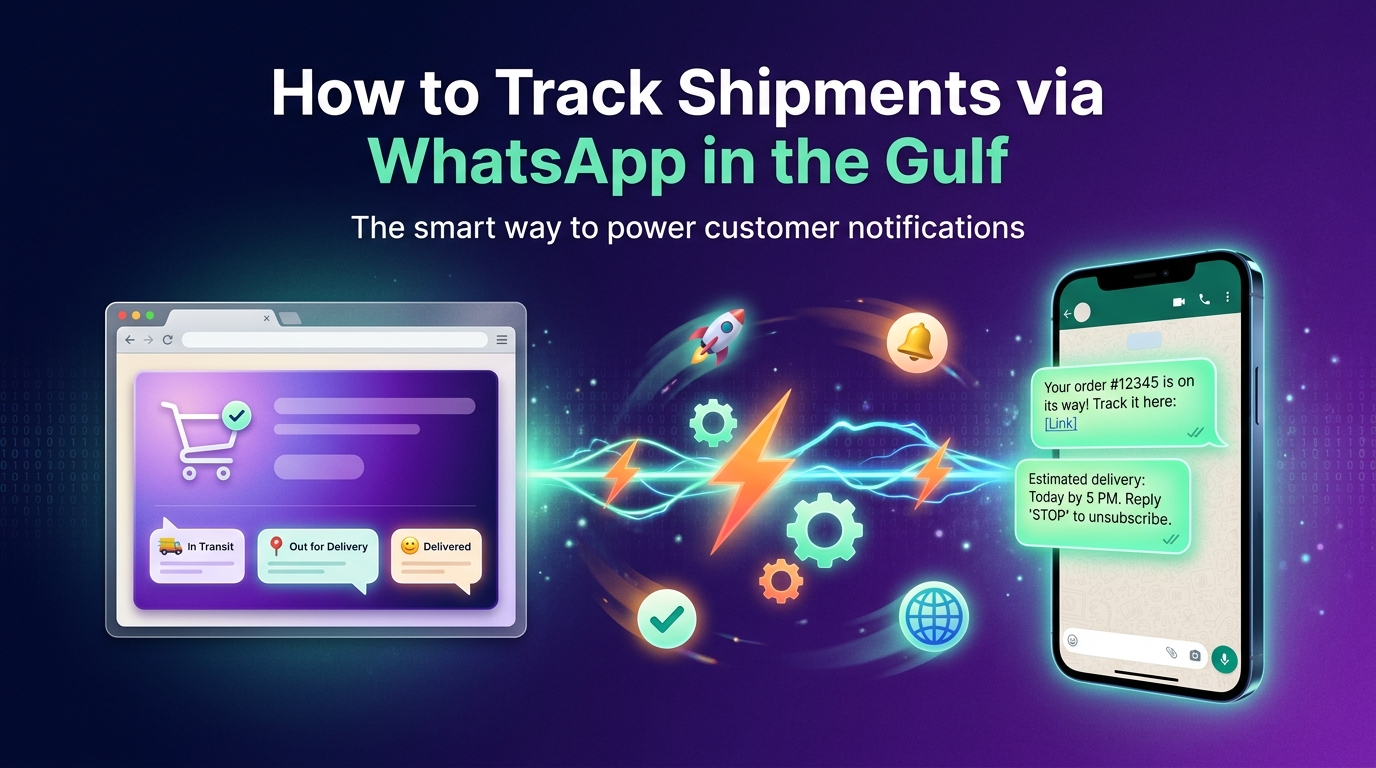
Imagine you've ordered a product online in Saudi Arabia, the UAE, or any other GCC country, eagerly awaiting its arrival. Instead, you find yourself stuck in a loop of trying to contact customer service, following a non-functional tracking link, or worse, having no idea about your shipment's whereabouts. This frustrating scenario is not uncommon in our region, where transparent shipment tracking poses a significant challenge for many businesses and customers alike. Fortunately, the WhatsApp Business API offers a revolutionary solution to this problem, transforming the tracking experience from a source of frustration into a competitive advantage.
Why is WhatsApp Shipment Tracking an Urgent Necessity in GCC Countries?
In the thriving e-commerce market of GCC countries, where consumers expect unparalleled speed and efficiency, merely dispatching a product is no longer enough. The post-purchase experience, especially shipment tracking, has become a crucial factor in building or losing customer loyalty. Customers in the region prefer easy and direct communication, and WhatsApp is undeniably the most widely used communication channel.
Businesses that fail to provide clear and regular updates on shipment status risk losing customer trust and increasing their customer service burden. Frequent phone calls and inquiries like "Where is my shipment?" consume valuable time and resources. This is where WhatsApp logistics steps in as a savior, offering an ideal platform to automate these updates and deliver a seamless experience that aligns with the expectations of the GCC consumer, who spends a significant part of their day on this app.
Furthermore, the fast-paced nature of e-commerce in the region, with increasing demand for same-day or next-day delivery, makes instant and accurate updates essential. The absence of an effective shipment tracking system leads to higher cancellation rates, increased operating costs, and a deteriorating brand reputation. Adopting WhatsApp Business API solutions for shipment tracking is not a luxury; it's a strategic investment in the future.
How Does WhatsApp Business API Transform the Shipment Tracking Experience?
While regular WhatsApp can be used for personal communication, the official WhatsApp Business API is the true tool that enables businesses to elevate the shipment tracking experience to a professional level. The API offers extensive automation capabilities, allowing companies to send proactive and instant shipping status updates without continuous human intervention. This means customers receive real-time notifications when a product is shipped, when it's out for delivery, and when it arrives at its destination.
With the API, businesses can directly connect their Order Management Systems (OMS) or Enterprise Resource Planning (ERP) systems to WhatsApp. This integration leads to a seamless flow of information, where tracking data is automatically pulled and transformed into customized WhatsApp messages. The result is a significantly enhanced customer experience, where customers feel reassured and in control, reducing their need to contact customer service directly to inquire about their shipment.
Smart Automation: From Notifications to Inquiries
The capabilities of the WhatsApp Business API extend beyond merely sending notifications. Businesses, in collaboration with a platform like LetsBot, can build intelligent AI Chatbots capable of handling customer inquiries about shipment tracking around the clock. Instead of waiting for a customer service agent to respond, a customer can simply send their tracking number to the bot and receive an instant update.
The LetsBot platform allows you to program your WhatsApp bot to provide LetsBot WhatsApp bot accurate order status updates and even handle frequently asked questions about shipping policies or estimated delivery times. This automation not only delivers a faster and more efficient customer experience but also reduces pressure on your customer support team, allowing them to focus on more complex issues requiring human intervention. Through automated order status notifications, customers can stay informed every step of their shipment's journey.
Practical Steps to Implement a WhatsApp Shipment Tracking System with LetsBot
Implementing an effective shipment tracking system via WhatsApp is not complicated, especially when using an integrated platform like LetsBot. Here are the essential steps you can follow:
- Obtain WhatsApp Business API: Start by subscribing to the LetsBot platform. As an official Meta Business partner, we ensure a smooth and fast setup process for obtaining the WhatsApp Business API, including providing a free WhatsApp MCP server with any API plan.
- Integrate Your E-commerce Platform: Connect your online store (whether Salla, Zid, or WooCommerce) with the LetsBot platform. This integration allows us to automatically pull order and shipping data.
- Define Message Templates: Design WhatsApp message templates relevant to shipment tracking. These templates should be clear, concise, and contain useful information such as the tracking number, shipment status, and a direct tracking link. These templates must be approved by Meta.
- Set Up Automation Rules: Configure automation rules on LetsBot to send messages based on shipment status changes. For example, send a "Shipped" message when your order status changes to "Shipped," and an "Out for Delivery" message when the shipment is close to the customer.
- Activate Chatbot (Optional but Recommended): Train your AI chatbot on LetsBot to respond to customer inquiries about shipment status. The bot can provide instant information and reduce the need for support team intervention.
- Monitor and Optimize: Monitor the performance of your tracking system, collect customer feedback, and make necessary adjustments to continuously improve the experience.
LetsBot's Competitive Advantages in Shipment Tracking for GCC Countries
LetsBot deeply understands the needs of businesses in GCC countries, which is why the complete LetsBot platform has been designed to offer integrated and customized solutions for shipment tracking and other communication processes. As an official Meta Business partner, we guarantee the highest levels of reliability, security, and compliance with regional standards (such as CITC, TDRA, NTRA, CITRA, CRA, TRA).
Alongside our robust infrastructure, we offer 24/7 technical support in Arabic, ensuring you receive assistance whenever you need it. We also support multi-currency billing (SAR, AED, EGP, KWD, QAR, BHD), making it easier for businesses across the region to manage their costs.
Seamless Integration with E-commerce Platforms
One of the biggest challenges in automating shipment tracking is ensuring seamless integration between the WhatsApp system and the e-commerce platform. LetsBot excels in this area by providing ready-made integrations with the most popular e-commerce platforms in the region and worldwide:
- Salla Integration: For your Salla store, you can easily connect your account to start sending automated shipping updates to your customers.
- Zid Integration: If you use the Zid platform, integrating LetsBot ensures a seamless flow of order and shipment data.
- WooCommerce Integration: For stores built on WooCommerce, LetsBot offers a powerful solution to automate tracking notifications directly from your WooCommerce dashboard.
These integrations significantly reduce the manual effort required and ensure that tracking data is always accurate and up-to-date, which enhances the customer experience and reduces "Where is my shipment?" inquiries. The bulk sending feature can also be used to inform customers of any general delays or important updates all at once.
Overcoming Challenges: Tips for Successful WhatsApp Shipment Tracking
Despite the numerous benefits, there are some challenges you might face when implementing a shipment tracking system via WhatsApp. Here are some tips to overcome them and ensure maximum success:
- Balance Updates: Avoid over-messaging. Updates should be concise, relevant, and timely to avoid annoying the customer. Typically, a message upon shipping, another when delivery is approaching, and one upon delivery are sufficient.
- Transparency and Clarity: Ensure your messages are clear and direct. Use simple, understandable language, and provide all necessary information (tracking number, link, status).
- Handle Exceptions: Plan how to deal with delayed or lost shipments. The chatbot should be able to direct the customer to a human support team when necessary, or provide information on how to file a claim.
- Privacy Compliance: Always adhere to regional data protection regulations (such as CITC, TDRA) and global ones (GDPR). Obtain customer consent before sending marketing messages, and ensure an easy opt-out option is available.
- Measure Performance: Use LetsBot analytics to monitor the effectiveness of your tracking campaigns. Track message open rates, link click-through rates, and customer feedback. You can even use the WhatsApp ROI Calculator to evaluate your return on investment.
By following these tips, you can build a shipment tracking system that not only meets but exceeds customer expectations, enhancing their satisfaction and loyalty to your brand.