
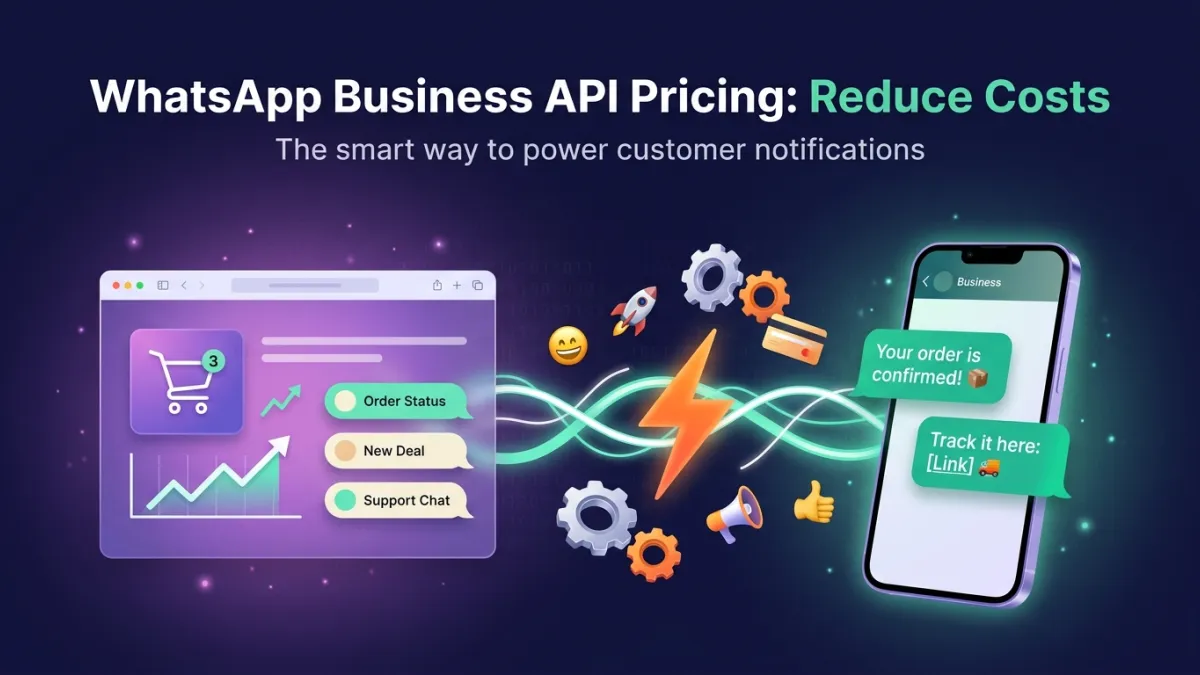
Have you ever checked your WhatsApp Business bill and been surprised by how high it was? You're not alone. Many businesses in the MENA region rely on WhatsApp for customer communication, but few truly understand the complexities of WhatsApp conversation pricing and how it can impact their budget. What appears to be an easy and effective communication tool can turn into an unexpected cost driver if the right conversation management strategies aren't in place. In this guide, we'll reveal the reasons behind high bills and provide practical solutions to reduce your expenses while maintaining an excellent customer experience.
Understanding WhatsApp Conversation Pricing: Essentials to Know
Since 1 July 2025, Meta, WhatsApp's parent company, has moved from conversation-based pricing to per-message pricing. This fundamental change means you pay for each delivered message according to its category and the recipient's country, rather than for a complete 24-hour conversation. So what determines the cost of each message?
- 24-Hour Customer Service Window: When a customer sends you a message, a 24-hour customer service window opens during which you can reply with free-form messages without templates. These replies (service messages) are free until 30 September 2026. From 1 October 2026 they are charged at the same rate as utility messages in that market, with a free tier of 1,000 delivered service messages per business phone number each month (shared by 1:1 and group chats, with no roll-over). Once the window closes, you can only message the customer with a paid, pre-approved template.
- Message Categories: Meta distinguishes between service messages and template messages, each with different pricing:
- Service Messages: These are your free-form replies to customers inside the 24-hour window, often customer service inquiries or support requests. Their cost is low: they are free until 30 September 2026 and are then charged at the utility rate once the monthly free tier is used up.
- Template Messages: These are pre-approved messages your business sends to start a conversation or to reach a customer outside the 24-hour window, such as order notifications, appointment reminders, or marketing campaigns. Each one is charged by category: marketing (the most expensive), utility or authentication. Utility templates sent inside an open customer service window have been free since 1 July 2025 and are charged from 1 October 2026.
- Message Templates: To use the official WhatsApp Business API, messages initiated by a business must be pre-approved by WhatsApp. These templates allow you to send structured messages with dynamic content (such as the customer's name or order number). Effectively understanding and utilizing these templates is key to reducing your WhatsApp API fees.
WhatsApp conversation pricing varies by the recipient's country and the message category, and Meta can change its rates only on 1 January, 1 April, 1 July and 1 October. Therefore, it's crucial to be aware of the specific prices for countries like Saudi Arabia, UAE, Egypt, Kuwait, Qatar, and Bahrain to avoid surprises in your monthly bill. A platform like LetsBot, as an official Meta partner, ensures pricing transparency and helps you understand these details accurately.
Hidden Reasons for High WhatsApp Business Bills and How to Avoid Them
While the WhatsApp Business API offers immense communication power, misunderstanding or inefficient management can lead to an unjustified increase in your WhatsApp Business bill. Here are some common reasons and how to avoid them:
- Not Utilizing the 24-Hour Window: This is one of the biggest cost drivers. If a customer service agent takes too long to respond to a customer inquiry (more than 24 hours), the customer service window closes and you can only reply with a paid template, instead of a free-form reply that is free until 30 September 2026 or covered by the monthly free tier after that.
- Overusing Paid Message Templates: Sending message templates for purposes that could be resolved with free-form replies inside the 24-hour customer service window is a waste of resources, especially marketing templates, which are the most expensive. For example, if a customer has just messaged you, reply with a free-form message instead of sending a template.
- Not Automating Initial Responses: Often, automated replies or smart WhatsApp chatbots can handle frequent inquiries immediately, keeping the conversation within the 24-hour window and reducing the need for lightning-fast human agent intervention. This reduces the need for paid templates after the window closes.
- Ignoring Free Entry Points: When a customer messages you from a Click-to-WhatsApp Ad or a Facebook Page call-to-action button and you reply within 24 hours, that reply is free and opens a 72-hour window in which all messages, including templates, are free. Not utilizing them means you might pay for messages that could have been free.
- Not Optimizing Conversation Flows: Disorganized conversations that require multiple back-and-forth messages due to unclear information or difficulty accessing it increase the likelihood of exceeding the 24-hour window and incurring additional charges.
To get the most out of the official WhatsApp Business API and reduce costs, your strategy should focus on efficiency and speed in responding, smart automation, and optimal use of message templates. This is key to controlling WhatsApp conversation pricing.
Practical Strategies to Reduce Your WhatsApp Business Bill
Now that we understand WhatsApp conversation pricing and common pitfalls, let's move on to solutions. There are several strategies you can implement to significantly reduce your WhatsApp Business bill:
- Smart Automation Using WhatsApp Bots:
- Instant Replies to Common Inquiries: A WhatsApp bot can handle 70-80% of repetitive inquiries instantly, ensuring the conversation stays within the 24-hour window without the need for paid templates.
- Customer Guidance: The bot can guide customers to appropriate resources or collect essential information before transferring them to a human agent, saving time and making agent interaction more efficient.
- Abandoned Cart Recovery: The bot can send automated reminders to customers who have left items in their shopping cart, increasing conversion rates without costly human intervention.
LetsBot platform offers the AI WhatsApp Bot Guide 2026, which can be trained on your specific data to handle customer inquiries smartly and efficiently, significantly reducing the number of conversations requiring human intervention.
- Optimizing Live Chat Management:
- Unified Multi-Agent Inbox: This inbox allows multiple agents to manage conversations from one place, ensuring quick responses and reducing the chance of the 24-hour window expiring.
- Prioritizing and Routing Conversations: Conversations can be routed to the most suitable agent based on topic or specialization, reducing resolution time and increasing efficiency.
- Monitoring and Performance: Monitoring agent performance and average response time helps identify weaknesses and improve processes.
- Strategic Use of Message Templates:
- Avoid Unnecessary Message Templates: Use message templates only to initiate new conversations or to send important notifications outside the 24-hour window.
- Optimize Template Content: Make your message templates clear, concise, and relevant to reduce the need for multiple follow-up messages.
- Automated Order Notifications: Use message templates to send order status updates or shipping confirmations, reducing manual customer inquiries.
- Leveraging E-commerce Integrations:
- Connecting WhatsApp with platforms like Salla, Zid, and WooCommerce allows for the automation of messages such as order confirmations, shipping updates, and abandoned cart reminders. These messages, when sent strategically, can reduce the need for human intervention and increase efficiency.
How LetsBot Helps You Control WhatsApp Conversation Pricing
At LetsBot, we understand the challenges businesses face in managing WhatsApp conversation pricing. That's why we've designed our platform to be a comprehensive solution that not only helps you communicate effectively but also significantly optimizes costs. As an official Meta partner, we provide you with the tools and expertise needed to maximize the benefits of the WhatsApp Business API.
- Trainable AI WhatsApp Bot:
We offer smart WhatsApp bots that can be trained on your database and business information to respond to customer inquiries accurately and quickly. This significantly reduces the need for human agent intervention, keeping conversations within the 24-hour window and lowering WhatsApp API fees.
- Unified Multi-Agent Live Chat Inbox:
Your entire team can manage all WhatsApp conversations from one place. This ensures no message is missed, speeds up response times, and efficiently distributes work among agents. Speed here is key to replying inside the customer service window and avoiding paid templates.
- Smart Bulk Messaging Campaigns:
You can send targeted bulk messages to your customers for either announcements or updates. When used intelligently, these campaigns can open new, high-value conversations, justifying the cost and ensuring excellent returns on investment.
- E-commerce and Payment Integrations:
Through integration with platforms like Salla, Zid, and WooCommerce, as well as payment gateways such as Stripe and PayTabs, you can automate notifications like order status updates, abandoned cart reminders, and payment confirmations. This automation not only saves time but also reduces the need for costly manual interactions.
- Free WhatsApp MCP Server:
One of the unique advantages we offer is the LetsBot WhatsApp MCP Server — Free with any API plan. This server is essential for running the WhatsApp Business API, and offering it for free saves our customers a significant additional cost that would otherwise be added to their overall WhatsApp Business bill.
- Compliance and 24/7 Support:
We ensure compliance with all regional regulations (CITC, TDRA, NTRA, CITRA, CRA, TRA) in addition to GDPR, and provide 24/7 multilingual support. This ensures your operations are smooth and trouble-free, reducing any potential costs arising from non-compliance or technical issues.