

Have you ever wondered about the secret behind the success of car dealerships that seem to nail their sales predictions every time? In a market characterized by rapid fluctuations and changing consumer tastes, accurately performing sales forecasting might seem like an almost impossible task. So, how can a car dealership prepare for the future, manage its inventory efficiently, and allocate its marketing and sales resources in the best possible way without a clear vision of what tomorrow holds? The answer lies in adopting advanced strategies and modern technological tools that don't just analyze the past but intelligently look towards the future.
Why is Sales Forecasting the Cornerstone for Car Dealerships?
In the automotive industry, where transaction values are high and sales cycles are long, sales forecasting isn't just a guess; it's a strategic necessity. The ability to accurately predict future sales volumes empowers car dealerships to make informed decisions that directly impact their profitability. Accurate forecasts enable optimal inventory management, reducing excess storage costs and ensuring the availability of desired vehicles at the right time. They also aid in workforce planning and training, ensuring a competent sales team is ready to handle anticipated demand.
Furthermore, effective sales forecasting guides marketing and advertising strategies. Instead of random spending, dealerships can precisely target their campaigns towards segments expected to be most responsive, increasing marketing expenditure efficiency and boosting return on investment. Without clear forecasts, dealerships risk operating in a state of uncertainty, which can lead to missed opportunities or incurred losses due to uninformed decisions.
Understanding the Sales Stages in the Automotive Industry
The car sales process is characterized by multiple steps, each representing an opportunity to assess the deal closure probability. Sales stages typically begin with an initial customer inquiry, whether online or through a showroom visit. Steps then follow, such as a test drive, negotiations regarding price and specifications, discussions about financing and insurance options, and finally, vehicle delivery. At each of these stages, the customer's level of interest and readiness to purchase changes, and thus the probability of completing the deal also changes.
Tracking these stages is vital for car dealerships aiming to improve their sales forecasts. By clearly defining each stage and assigning an estimated value or weight to it, managers can gain a comprehensive picture of their potential deal pipeline. For example, a customer who has completed a test drive and discussed financing options has a significantly higher deal closure probability than a customer who merely sent an initial email inquiry. This in-depth understanding allows sales team efforts to be directed towards the most promising deals and helps identify bottlenecks in the sales pipeline.
The Role of Technology in Improving Sales Forecasting: The LetsBot Platform
Traditional methods are no longer sufficient to keep pace with today's dynamic car market. This is where modern technology, specifically CRM solutions for car dealerships, plays a revolutionary role in how deals are managed and sales forecasts are made. The LetsBot platform offers an integrated solution for Deals Pipeline management, enabling car dealerships to track every sales opportunity with precision and efficiency.
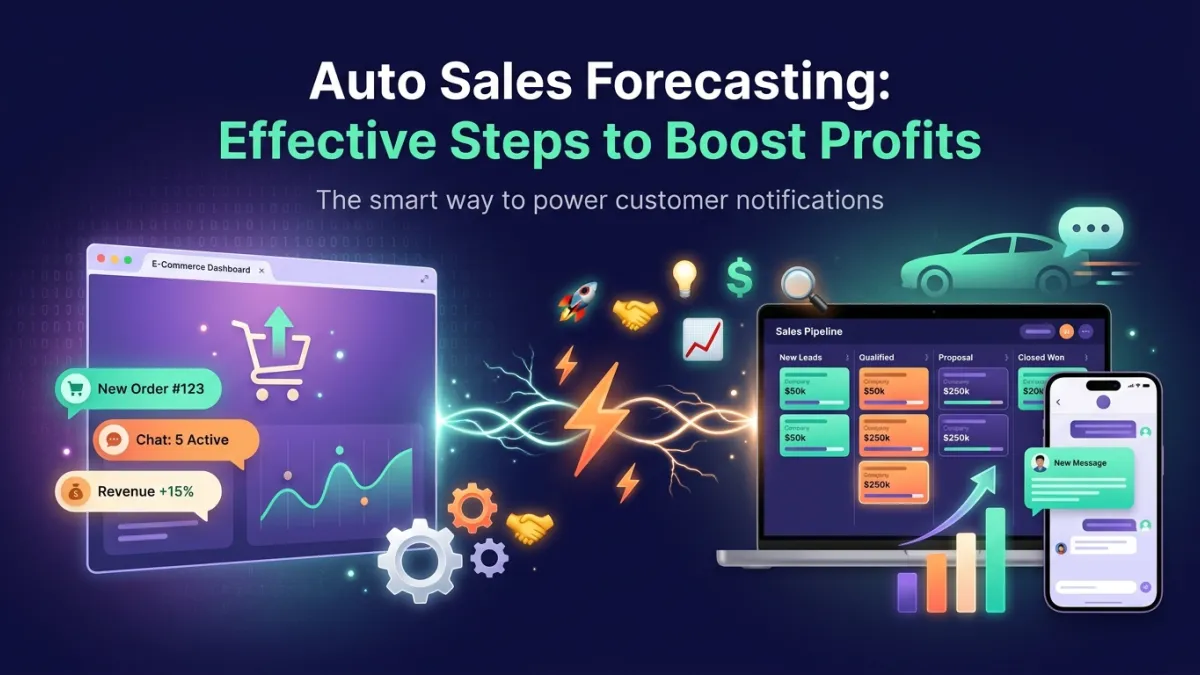
LetsBot allows you to organize your deals on a visual Kanban board, where you can see all deals at a glance. For each deal, you can specify the estimated amount and track the total amount for each sales stage. Most importantly, a deal closure probability can be assigned to each stage, providing you with more realistic weighted forecasts. Deals are easily created and updated from the customer profile within the live chat, ensuring your team is always up-to-date with the latest developments. Whether a deal is won or lost, you can record the reason for future performance analysis and learning from every experience.
Practical Strategies to Increase Sales Forecast Accuracy
To get the most out of sales forecasting tools, they must be integrated with practical strategies that enhance accuracy and effectiveness. Merely owning the tool is not enough; it must be used intelligently:
- Utilize Historical Data and Trend Analysis: Analyze past sales data to identify seasonal patterns, best-selling cars, and average sales cycle duration. This data provides a strong foundation for your future forecasts. AI, through LetsBot's connectors with ChatGPT and Claude, can assist in summarizing chats and analyzing campaigns to pinpoint prevailing customer interaction trends.
- Determine Deal Closure Probability for Each Stage: As mentioned earlier, your team should assign a realistic success rate to each of the sales stages. These rates are not static; they should be regularly reviewed and adjusted based on actual performance and changing market conditions.
- Continuous Feedback and Forecast Adjustments: The sales forecasting process should be dynamic, not static. Encourage the sales team to provide regular feedback on deals and constantly update deal statuses. Periodically review forecasts (weekly or monthly) to adjust them based on new information and market changes.
- Effectively Qualify Leads: The better the lead qualification at the beginning of the sales pipeline, the greater the accuracy of forecasts. Using an AI WhatsApp bot can help gather essential information and filter out non-serious leads, saving your sales team time and focusing their efforts on genuine opportunities.
Integrating Communication Channels to Enhance the Sales Pipeline
In the digital age, customers expect a seamless communication experience across multiple channels. Integrating various communication channels into a single inbox is a powerful strategy for car dealerships to enhance their sales pipeline and improve sales forecasting. The LetsBot platform allows you to gather WhatsApp messages, Instagram DMs, Facebook Messenger, Telegram, and even email messages in one place. This comprehensive integration provides your sales team with a unified view of all customer interactions, regardless of their preferred channel.
When all conversations are available in a shared inbox, your team can track the entire customer journey, from the initial inquiry to closing the deal. This wealth of data helps in understanding customer needs and intentions more deeply, leading to more accurate estimates of deal closure probability. For example, your team can follow a conversation that started on Instagram and then moved to WhatsApp, retaining the full context. Additionally, WhatsApp voice calls for business can be a powerful tool for quickly qualifying leads, while the AI bot builder can automate responses to frequently asked questions, freeing your team to focus on more complex tasks that require a human touch.