
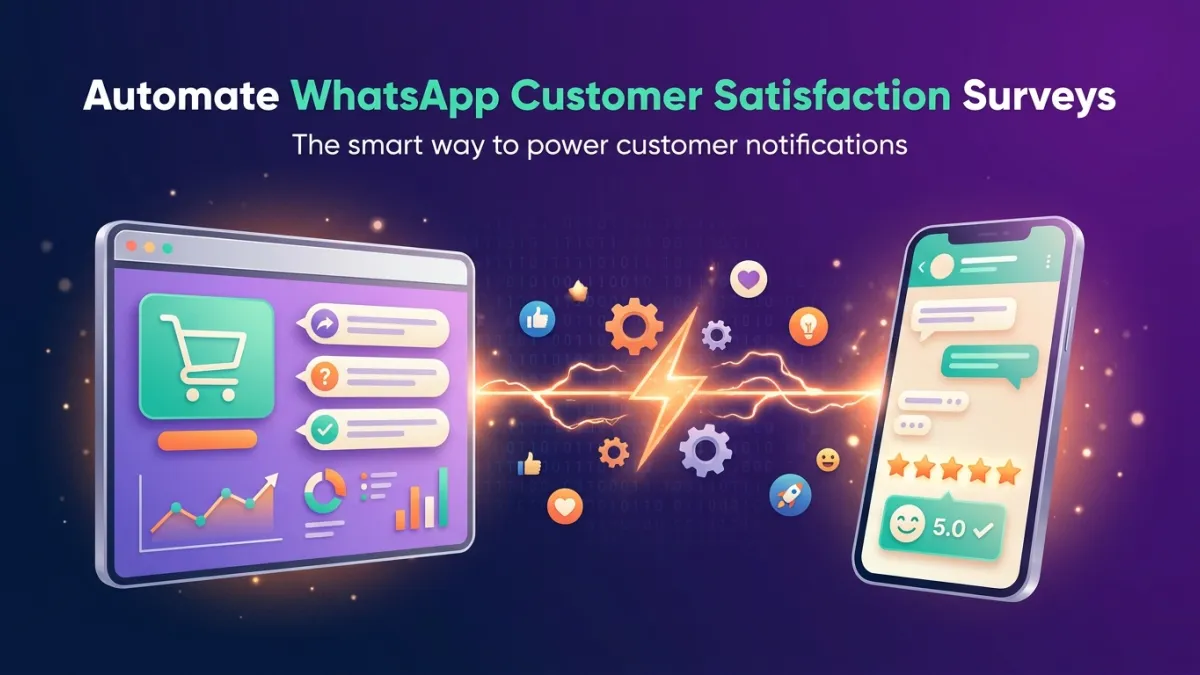
Do you truly know how your customers feel after every interaction with your business? In today's modern business world, simply offering a product or service is no longer enough; understanding customer experience and satisfaction has become a crucial element for continuous success. Imagine being able to automatically gather these valuable insights directly through your customers' preferred channel: WhatsApp. Customer satisfaction surveys via WhatsApp are not just a luxury; they are a strategic necessity that allows you to measure the true pulse of your customers and transform their feedback into opportunities for growth.
Why are Customer Satisfaction Surveys via WhatsApp Essential for Your Business?
In today's digital landscape, where speed and personalized interaction reign supreme, WhatsApp has become the preferred communication channel for millions. This means that any customer feedback collection strategy must include this powerful platform. Using WhatsApp for customer satisfaction surveys breaks down traditional barriers, such as emails that often land in spam folders or phone calls that can be intrusive. Customers prefer quick and easy interactions, which is precisely what WhatsApp offers.
It's not just about collecting data; it's about building stronger relationships. When customers feel their opinion is valued and heard, their loyalty increases. These surveys allow you to identify weaknesses in the customer journey and address them proactively, reducing churn rates and increasing conversion opportunities. They also provide invaluable insights for improving service quality, employee training, and even developing future products and services.
Types of Customer Satisfaction Surveys and How to Use Them
To get the most out of customer feedback, it's important to understand the different types of surveys and how to apply them effectively. The LetsBot platform supports key survey types that help you measure various aspects of customer satisfaction:
- Customer Satisfaction Score (CSAT): This is the most common metric, measuring how satisfied a customer is with a specific interaction, product, or service. A direct question like "How satisfied were you with our service today?" is asked, and the customer is requested to rate their experience on a scale of 1 to 5 or from "not satisfied at all" to "very satisfied." CSAT is excellent for evaluating individual interactions or after a support ticket is closed, giving you immediate insight into your team's performance.
- Net Promoter Score (NPS): This metric measures customer loyalty and their likelihood of recommending your product or service to others. The main question is "On a scale of 0 to 10, how likely are you to recommend our company/products/services to a friend or colleague?" Based on the responses, customers are categorized as Promoters (9-10), Passives (7-8), and Detractors (0-6). NPS provides a deeper look into long-term customer loyalty and helps identify promoters who can become brand ambassadors.
- Customer Effort Score (CES): This metric measures how easy it was for a customer to complete a specific task, such as resolving an issue or purchasing a product. A typical question is "How easy was it to handle your issue today?" or "How easy was it to use this product?" The goal is to identify and reduce any friction in the customer journey, leading to a smoother experience and higher satisfaction.
At LetsBot, these surveys are sent automatically after a conversation with the customer is closed or after a support ticket is resolved, ensuring immediate and relevant feedback. They are sent within the allowed 24-hour window for service messages and are not sent as marketing message templates.
Automating Customer Satisfaction Surveys via WhatsApp using LetsBot
The ability to automate customer satisfaction surveys is a game-changer for businesses aiming to efficiently enhance customer experience. With LetsBot, sending CSAT, NPS, and CES surveys becomes seamless and programmatic. This feature is set to be disabled by default, giving you full control over when and how it's activated. Once enabled by the workspace owner, surveys are sent after a conversation with the customer is closed or when a support ticket is resolved, ensuring that feedback is fresh and directly relevant to the most recent interaction.
Every survey message sent via WhatsApp is a paid message, but the benefit you gain from collecting this valuable data far outweighs the cost. Surveys are sent exclusively within the 24-hour window after the customer's last message, ensuring compliance with WhatsApp policies and maintaining a natural customer experience. This means you get timely feedback without the need for constant manual intervention, saving your team valuable time.
Automation doesn't stop at sending; it extends to results analysis. The LetsBot platform provides detailed reports on survey results for each individual agent, for each team, and even for each communication channel. This gives you a comprehensive overview of your customer service performance and helps you identify areas that need improvement. More importantly, special alerts are set up for staff in case of low satisfaction scores, allowing for rapid intervention and addressing any issues before they escalate. To learn more about managing chats that precede these surveys, you can refer to the WhatsApp Live Chat Guide.
Benefits of Using Automation in Customer Satisfaction Surveys
Implementing automation in collecting customer satisfaction surveys via WhatsApp brings a wide range of benefits that positively impact both operational efficiency and customer satisfaction:
- Increased Response Rates: Since WhatsApp is a personal and widely used communication channel, customers are more inclined to respond to surveys sent through it compared to traditional email or SMS.
- Instant and Real-time Feedback: Surveys are sent immediately after an interaction, ensuring that customer feedback is fresh and accurate. This allows you to respond quickly to issues and improve services instantly.
- Improved Agent Performance: Through individual reports, managers can identify each agent's strengths and weaknesses and provide targeted training, thereby enhancing overall service quality.
- Proactive Problem Identification: Low-score alerts enable your team to promptly address dissatisfied customers, transforming a potentially negative experience into an opportunity to regain trust.
- Time and Resource Savings: Automation eliminates the need for manual intervention in sending surveys and compiling data, freeing up your team to focus on more critical tasks.
- Actionable Analytics and Insights: Comprehensive reports provide deep insights into the performance of channels, teams, and agents, aiding in making informed business decisions.
Best Practices for Designing Effective WhatsApp Surveys
To get the most out of your customer satisfaction surveys via WhatsApp, it's crucial to design them smartly. Here are some best practices:
- Keep it Simple and Concise: Survey questions should be short, direct, and easy to understand. Remember that customers use WhatsApp for quick communication and won't dedicate much time to answering a complex survey. One or two focused questions are often sufficient.
- Choose the Right Timing: The best time to send a survey is immediately after the customer interaction ends or their issue is resolved. This ensures the experience is still fresh in their mind, leading to more accurate and honest feedback. Remember that LetsBot sends them automatically after the conversation is closed and within the 24-hour window.
- Use Clear and Friendly Language: Phrase questions in natural, friendly language that reflects your brand's personality. Avoid overly complex or formal terminology.
- Provide Easy Answer Options: Use buttons or numbered options to make it easy for customers to respond. For example, instead of asking the customer to type a long answer, provide them with buttons to rate their experience from 1 to 5.
- Explain the Survey's Purpose: At the beginning of the message, clarify to the customer that the survey aims to improve service and that their opinion matters. This encourages participation.
- Follow Up with Dissatisfied Customers: Use LetsBot's low-score alerts to immediately contact customers who expressed dissatisfaction. This shows them you care about their experience and are ready to resolve any issues. Integrating the AI WhatsApp Bot Guide 2026 can help analyze this feedback more deeply.
- Monitor Costs: Since every survey message is a paid message, it's important to monitor costs. The LetsBot platform can help you manage this. For more details, refer to Tools to Reduce WhatsApp Message Costs.
Listening to your customers is not just a competitive advantage; it's the foundation for sustainable growth. WhatsApp gives you the opportunity to listen to them where they prefer, in a way that makes them feel valued.