
Have you ever felt your e-commerce team is running in circles, trying to keep up with increasing customer demands, organizing logistics challenges, and managing marketing campaigns, all at once? In the face of rapid technological advancements, traditional methods of managing team tasks are no longer sufficient to achieve the required efficiency. E-commerce companies, especially in dynamic markets like the UAE, face immense pressure to optimize performance and deliver exceptional customer experiences. The ability to transform daily customer conversations into organized, actionable tasks and effectively follow up on them is key to success in this era.
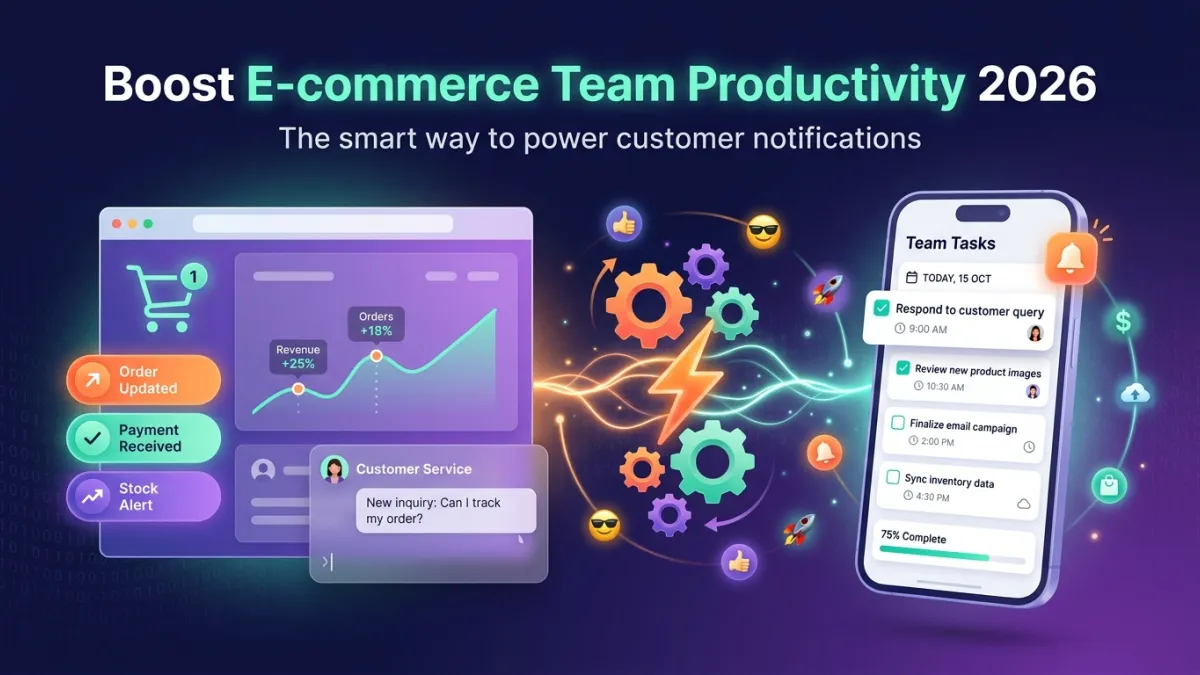
Imagine every customer inquiry, support request, or even product comment instantly transforming into a specific task assigned to the right employee, complete with a deadline and automated reminders. This isn't a distant dream; it's a reality achievable through integrated team task management tools specifically designed to meet the demands of modern e-commerce. Let's explore how these tools can radically boost your team's productivity.
Team Task Challenges in the Fast-Paced E-commerce World
E-commerce demands unparalleled responsiveness and high flexibility. From the moment a customer lands on your online store until the completion of a purchase and beyond, there's a long chain of interactions requiring attention and coordination. In this context, team tasks can include responding to product inquiries, processing orders, tracking shipments, handling returns, managing inventory, and updating website content. Without an effective system, these tasks can descend into chaos, leading to wasted time, duplicated efforts, and delayed responses, all of which negatively impact customer satisfaction and brand reputation.
Companies often rely on multiple, disconnected tools to manage these operations. The sales team might use a CRM, while the support team relies on email, and the marketing team uses spreadsheets to track campaigns. This fragmentation creates information silos, making it difficult for managers to gain a comprehensive overview of team performance and identify bottlenecks. It also leads to challenges in tracking work reminders and ensuring tasks are completed on time, affecting overall performance management.
Why Traditional Methods Fail in E-commerce Task Management?
The problem lies in the fact that most traditional task management solutions weren't specifically designed for the e-commerce environment, which is characterized by a massive flow of customer interactions across multiple channels. For instance, relying on manual to-do lists or spreadsheets can lead to:
- Loss of Context: When a customer conversation is manually converted into a task, the new employee taking over often loses the full context of the previous interaction, forcing them to re-ask for details that were already clarified.
- Delayed Responses: The absence of a centralized system for tracking tasks means some requests might be delayed or forgotten, negatively impacting the customer experience, especially in situations requiring a quick response.
- Difficulty in Tracking and Accountability: It becomes challenging to identify who is responsible for each task and its completion stage, hindering effective performance management and making it difficult to assess team productivity.
- Duplicated Efforts: More than one employee might unknowingly work on the same task, wasting time and resources.
- Lack of Effective Reminders: Traditional methods rely on human memory or manual reminders, increasing the likelihood of forgetting important work reminders or missing deadlines.
All these challenges directly impact operational efficiency and make it difficult for e-commerce teams to reach their full potential. The need for an integrated solution that connects customer communication with task management has become an urgent necessity. A platform like LetsBot's complete platform offers a comprehensive solution that brings these vital functions together in one place.
How Integrated Team Task Management Systems Revolutionize Productivity?
Integrated team task management systems, such as those provided by LetsBot, serve as the backbone for modern e-commerce operations. They don't just record tasks; they transform them into a driver for productivity and collaboration. Imagine the ability to convert any message in a shared inbox into an immediate work task, complete with all necessary details and context. This integration ensures no requests are lost and every customer interaction is converted into a clear action item.
With LetsBot, you can create tasks directly from any conversation, whether it's via WhatsApp, Instagram, Facebook Messenger, or even email. This eliminates the need to switch between different applications and keeps the workflow seamless. Here's how these features can boost your productivity:
- Create Tasks from Messages: You can convert any part of a customer conversation into a new task with a single click, directly linking it to the original conversation's context.
- Assign Tasks Clearly: Assign tasks to a specific employee on your team, ensuring accountability and preventing duplicate efforts.
- Set Deadlines and Priorities: Specify a due date for each task and assign a priority level (high, medium, low) to ensure focus on the most critical tasks.
- Track Progress with Multiple Views: Monitor task status using flexible views like list, Kanban board, or calendar, giving you a comprehensive overview of workload and progress.
- Recurring Tasks: For routine operations, you can set up recurring tasks to ensure they're not forgotten, such as post-purchase customer follow-ups or inventory updates.
- Add Comments and Attachments: Team members can add comments and notes within each task to exchange information and update progress, ensuring everyone stays informed.
- Work Reminders via App Notifications: The assigned employee receives instant notifications via the LetsBot mobile app when a task's due date approaches or new comments are added, ensuring no step is missed.
These features don't just organize work; they empower your team to work smarter, leading to faster customer responses, improved service quality, and ultimately, increased sales. The ability to transform every interaction into an actionable step is what distinguishes leading e-commerce businesses.
Integrating Tasks with Communication Channels: The Secret to Superior Performance
The true power of team task management lies in its seamless integration with primary communication channels. In today's e-commerce world, customers expect fast and efficient responses across their preferred channels. When your team can convert conversations directly into tasks, it significantly reduces friction and boosts efficiency. Imagine a customer sending a message via WhatsApp about an order issue, and the support agent can automatically create a follow-up task directly from within the conversation, assigning it to the shipping team with a deadline. This seamless process ensures no details are overlooked and the issue is resolved promptly.
LetsBot offers a shared inbox that consolidates all your conversations from WhatsApp, Instagram, Facebook Messenger, Telegram, and even email and WhatsApp voice calls, into one place. This integration isn't just about facilitating communication; it's about empowering your team to work as a unified unit. When team tasks are managed within the same system where customer communication occurs, it becomes easier for everyone to understand the full context of each task, improving performance management and increasing customer satisfaction. For more details on how to integrate email with WhatsApp in a single inbox, you can visit Email and WhatsApp in One Shared Inbox.
Furthermore, this integration allows for the use of AI to enhance task management. By leveraging AI connectors like ChatGPT and Claude, the system can analyze conversations and suggest potential tasks or summarize key points to streamline the task creation process. This reduces the burden on your team, allowing them to focus on tasks requiring human intervention, while automation handles routine tasks. This level of integration is what distinguishes modern e-commerce solutions.
Best Practices for Effectively Using Work Reminders and Team Tasks
To maximize the benefits of team task management tools in an e-commerce environment, a set of best practices must be followed to ensure efficiency and effectiveness. It's not enough to simply provide the tool; the team must be trained to use it intelligently to enhance overall performance management:
- Clearly Define Tasks: Ensure every task created has a clear and specific description of the required work and expected outcomes. Avoid ambiguity to ensure all team members understand what needs to be done.
- Assign Responsibilities: There should be one clear owner for each task. This prevents confusion and ensures accountability. Even if a task requires collaboration, there should be a task leader.
- Utilize Deadlines and Priorities: Regularly use the feature to set deadlines and assign priorities. This helps the team organize their time and focus on the most urgent and important tasks.
- Update Task Status Regularly: Encourage your team to continuously update task statuses (in progress, completed, pending). This provides transparent visibility into progress and helps managers track performance.
- Use Comments for Discussions: Instead of using external communication channels to discuss tasks, use the comments feature within the task. This keeps all relevant information in one place and makes it easy to refer back to.
- Conduct Regular Task Reviews: Periodically review open and completed tasks. This helps identify bottlenecks, estimate workload, and improve future workflows.
- Leverage Work Reminders: Ensure team members have enabled LetsBot mobile app notifications to receive their work reminders in a timely manner. This can be crucial for not missing deadlines. To learn more about our app, you can visit LetsBot Mobile App.
- Automate Recurring Tasks: Use the recurring tasks feature for any regular process, such as preparing weekly reports or following up with customers 30 days after purchase.
By adopting these practices, e-commerce businesses can transform team task management from an administrative burden into a competitive advantage, driving productivity and overall satisfaction.
"In the world of e-commerce, where every second makes a difference, transforming every conversation into an organized work task is the key to sustainable success."
These tools, especially with AI integration, allow you not only to organize tasks but also to analyze them. For instance, the WhatsApp integration with Claude can help summarize long conversations and identify key action points, simplifying the process of converting them into specific tasks. This ability to leverage AI in task management adds another layer of efficiency and innovation, ensuring your team operates at its full potential.