
Have you ever contacted an online store about an urgent order, only to find yourself waiting endlessly or being transferred between multiple agents before reaching the right person? This frustrating scenario is all too common in e-commerce and points to a fundamental issue: inefficient conversation routing. In the rapidly growing UAE market, where competition is fierce and customer expectations are high, this vital point can no longer be overlooked. How your organization manages the flow of customer messages can be the difference between a satisfied, loyal customer and one who leaves for your competitors.
What is Conversation Routing and Why is it the Cornerstone of Customer Service?
Conversation routing is the process of automatically directing incoming customer messages to the most suitable agent or department within a customer service team. Instead of all messages landing in a general inbox, the system analyzes the message (based on the channel, keywords, or even previous customer data) and intelligently routes it. In the world of e-commerce, where customer inquiries vary from product questions, shipping issues, return requests, or even technical inquiries, this efficient distribution becomes paramount.
The absence of an effective conversation routing system leads to utter chaos. Imagine a customer with a payment issue receiving a reply from a marketing specialist, or a simple order status inquiry waiting hours to be routed. These delays and misdirections not only waste agents' time but significantly decrease customer satisfaction and increase the likelihood of cart abandonment or customers not returning for future purchases. Therefore, investing in a robust conversation routing system is not just a luxury, but a strategic necessity to ensure a seamless and efficient customer experience, especially in the fast-paced e-commerce environment.
How Conversation Routing Revolutionizes Your Customer Service?
Implementing an advanced conversation routing system brings a host of direct benefits that reshape the entire customer service experience. These benefits extend beyond mere operational efficiency to enhance customer loyalty and increase revenue.
- Reduced Response Times: When conversations are routed directly to the specialized agent or department, the time taken to identify and begin resolving the issue is significantly reduced. This means customers receive assistance much faster, greatly improving their experience.
- Increased Customer Satisfaction: Customers value speed and accuracy. When they speak with an agent who understands the context of their issue and possesses the necessary expertise to resolve it, their satisfaction level rises. This leads to positive reviews and greater brand loyalty.
- Improved Agent Efficiency: Instead of wasting time sorting or transferring conversations, agents can focus on solving problems that align with their skills and knowledge. This reduces agent burnout and increases their productivity.
- Personalized Customer Experience: An advanced conversation routing system can consider a customer's history and purchasing behavior to direct them to an agent who has previously interacted with them, or one specialized in the type of products they prefer. This adds a personal touch that strengthens the customer relationship.
- Optimized Resource Management: By distributing work evenly or based on each agent's current workload, e-commerce businesses can ensure that no single team is overwhelmed while others are idle. This guarantees the most efficient utilization of human resources.
How LetsBot's Advanced Conversation Routing Works
At LetsBot, we've designed conversation routing not just as a feature, but as an integrated system engineered to empower e-commerce businesses to deliver exceptional customer service across multiple channels. Our system is characterized by flexibility and intelligence, ensuring every conversation reaches the most suitable agent at the right time. The workspace owner must activate and configure this feature according to their business needs.
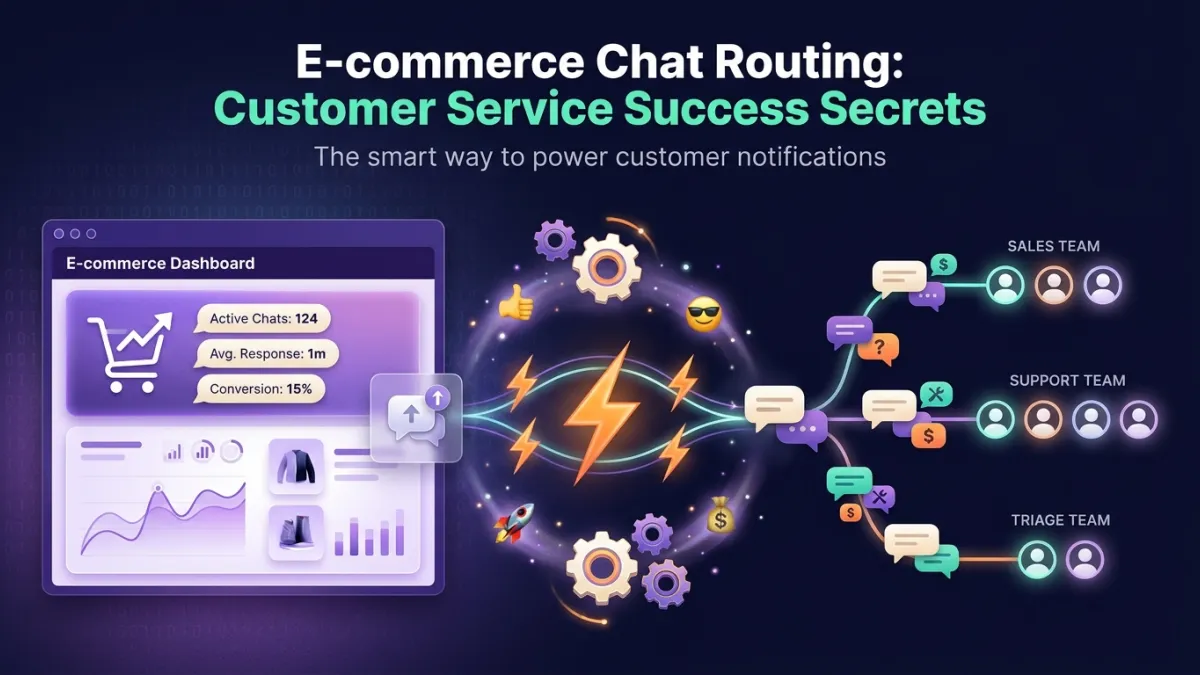
LetsBot allows you to create various customer service departments, such as Sales, Technical Support, Shipping, or Returns. Agents can then be assigned to these departments based on their specializations. When a new conversation arrives, the system routes it based on a set of predefined rules:
- By Channel: Routing WhatsApp messages to one department, and Instagram messages to another.
- By Tags or Customer Lifecycle Stage: Directing new customers to the sales team, and existing customers to the support team.
- By Language: Routing Arabic-speaking customers to Arabic-speaking agents, and so on.
- By Keywords: If the message includes words like "shipping" or "return," it's automatically directed to the relevant department.
- By Custom Field or Ad Source: Conversations originating from a specific advertising campaign or containing particular information in the customer profile can be directed to a specialized team.
- By Working Hours and Shifts: Ensuring conversations are routed to currently available agents within their defined working hours or shifts.
Additionally, LetsBot supports several strategies for distributing conversations among agents within the same department:
- Round Robin: Distributing conversations equally among available agents.
- Least Open Chats: Routing the conversation to the agent with the fewest open chats currently.
- Skills-Based: Routing conversations based on specific agent skills, such as "Product Expert X" or "Farsi Speaker."
All of this is managed with a live view of each agent's workload status and assigned chat limits, giving you complete control and transparency in managing your team. This system significantly improves your team's efficiency, as agents can focus on conversations that match their expertise and skills. To learn more about effectively managing your team, you can check out our WhatsApp Live Chat Guide.
Integrating Conversation Routing with Multiple Channels in LetsBot
LetsBot's conversation routing system isn't limited to just one channel; it's designed to work seamlessly across all communication channels your customers use. This comprehensive integration is what sets our platform apart, as we consolidate all customer interactions into a single team inbox, giving you a unified view and complete control.
Imagine a customer sending an inquiry via WhatsApp, then another message via Instagram, and perhaps they also have a previous email. In traditional systems, these interactions might be treated as separate "conversations," requiring the agent to search across different channels and potentially ask the customer to repeat information. But with LetsBot, all these conversations are merged into one customer profile, and routing rules are applied to each.
Channels supported by LetsBot that benefit from the advanced routing system include:
- Official WhatsApp Business API: Efficiently routing chat messages and WhatsApp voice calls.
- Instagram Direct Messages: Integrating DMs into the unified inbox and applying routing rules.
- Facebook Messenger: Managing Facebook page conversations and distributing them to specialized teams.
- Telegram: Integrating Telegram chats and distributing them to ensure a quick response.
- Email: Even emails can be integrated and routed as part of a comprehensive communication strategy.
This integration means your team can operate with unparalleled efficiency, regardless of the channel the customer chooses. The right message is directed to the right agent, with access to the complete conversation history across all channels, ensuring a consistent and personalized customer experience. For more details on how to manage departments and conversation routing, you can visit our Departments and Conversation Routing page.
Measuring Performance and Optimizing Routing Strategies
It's not enough to simply implement a conversation routing system; its performance must be continuously measured and optimized to ensure maximum benefit. LetsBot provides powerful analytical tools that help you understand how your routing system is working and identify areas for improvement.
You can track key performance metrics such as:
- Average Response Time: How long does it take an agent to respond to a conversation after it's routed?
- Average Resolution Time: How long does it take to fully resolve a customer's issue?
- Conversion Rates: Does effective routing lead to increased sales or other objectives?
- Customer Satisfaction (CSAT/NPS): What is the customer's evaluation of the experience after interacting with your team? This can be measured through CSAT and NPS customer satisfaction surveys after the conversation is closed.
- Agent Efficiency: How many conversations does each agent handle, and what is their quality?
Using this data, you can adjust routing rules, retrain agents, or even restructure your customer service departments. For example, if you notice that a specific department consistently has longer wait times, you might need to reallocate agents or modify routing rules to reduce the load on that department. This data-driven approach ensures that your conversation routing system continuously evolves to meet your changing business and customer needs, leading to continuous improvement in customer experience and increased ROI. You can use our WhatsApp ROI Calculator to estimate the potential return from improved customer service.