

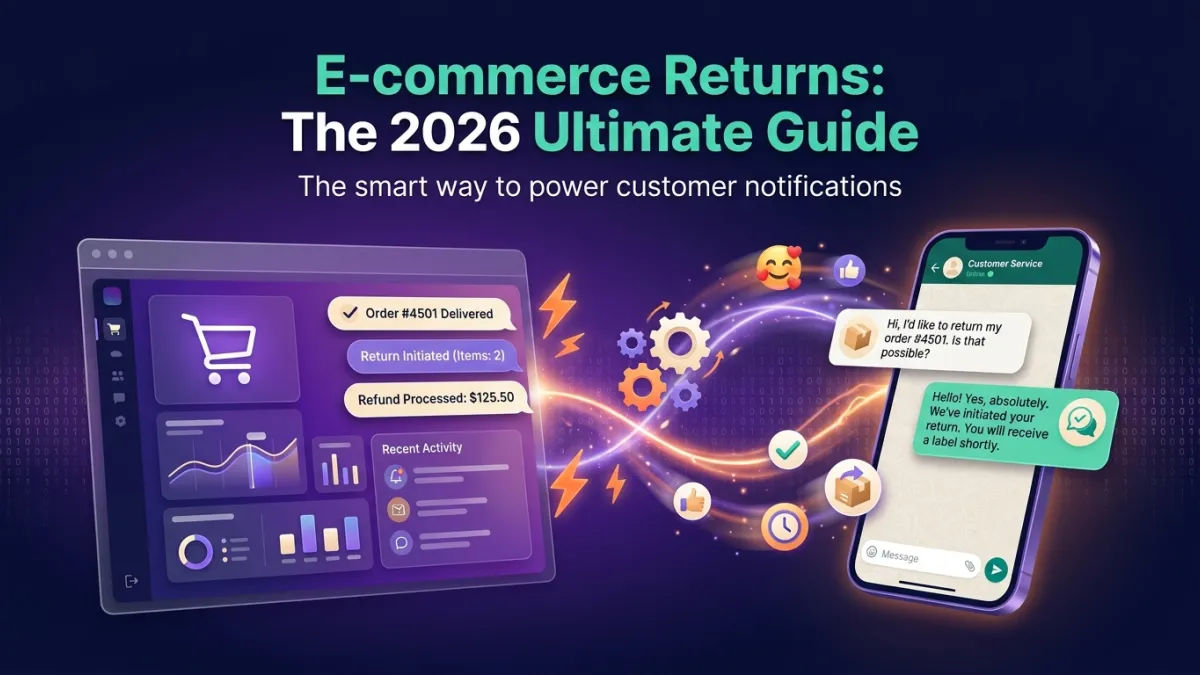
Did you know that nearly 30% of all online purchases are returned? This staggering figure presents a huge challenge for e-commerce businesses. The process of product returns isn't just a simple logistical procedure; it's a critical touchpoint that can either solidify customer loyalty or drive them away. In 2026, with increasing competition and evolving customer expectations, effectively managing returns is no longer an option, but an absolute necessity for success.
Imagine a scenario where a customer orders a product and then decides to return it. How do you make this experience as smooth and pleasant as possible? How do you transform potential frustration into an opportunity to build trust? This comprehensive guide will take you on a journey to explore best practices, strategies, and innovative technologies to turn the challenge of product returns into a genuine competitive advantage for your online store.
Product Returns Challenges: From Burden to Exceptional Opportunity
The high rates of product returns in e-commerce place significant pressure on profit margins and consume vast resources. Every return process not only means lost original sales but also involves double shipping costs, inspection, restocking, and sometimes product disposal if it's unfit for resale. These hidden costs can accumulate quickly, negatively impacting business sustainability.
In addition to material costs, there's a psychological and moral impact on customers. A complex or slow return process can damage your brand's reputation and lead to the loss of potential customers. Conversely, a clear and easy return policy can be a major draw, as consumers tend to purchase from stores that offer them flexibility and peace of mind regarding product returns.
To transform this challenge into an opportunity, e-commerce companies must adopt a proactive and comprehensive approach. This means not only simplifying procedures but also understanding the root causes of returns, improving product descriptions, and providing effective communication channels. When product returns are handled efficiently, they can become a strength that differentiates your store and increases long-term customer loyalty.
Effective Return Policy: Building Bridges of Trust with Your Customers
A clear and fair return policy is the cornerstone for building trust with customers in the e-commerce world. Customers cannot touch or try products before purchasing, so knowing they have an easy return option gives them peace of mind and encourages them to make a purchase decision. An ideal return policy isn't just a list of strict rules; it's a promise of transparency and fairness.
Elements of an Ideal Product Return Policy:
- Clear Terms and Conditions: The policy should be easy to understand, free of complex jargon, and clearly accessible on your website.
- Reasonable Return Period: Give customers enough time to evaluate the product. Typically, 14 to 30 days is an acceptable period.
- Conditions for Accepted Returns: Clearly define the acceptable condition of the product for return (e.g., original condition, with tags, etc.).
- Refund Options: Offer various options such as money refunds, product exchanges, or store credit.
- Who Bears Shipping Costs: Be clear about who pays for return shipping costs – is it the customer's responsibility or the store's?
- Simplified Return Process: Make the steps required to return a product as easy and straightforward as possible, preferably partially automated.
When customers feel confident that they won't face difficulties if they wish to return products, it reduces purchase hesitation and encourages repeat business. Remember that every customer interaction, even in challenging circumstances like returns, is an opportunity to strengthen the relationship and build brand loyalty.
The Role of WhatsApp in Streamlining Product Returns
In the age of speed, instant communication has become key to customer satisfaction. This is where the Official WhatsApp Business API plays a powerful role in transforming the product returns experience from a complex process into a smooth and satisfactory one. By integrating WhatsApp into your customer service strategy, you can automate many aspects while providing personalized support.
Automating Notifications and Updates
One of the biggest friction points in the return process is uncertainty about order status. Using WhatsApp, you can send automated notifications to customers at every stage of the return process:
- Return Request Confirmation: Send an instant message to the customer as soon as they submit a return request.
- Shipping Status Updates: Notify the customer when the returned product is received by the warehouse.
- Inspection and Refund Confirmation: Send a notification once the product has been inspected and the refund process or replacement product shipment is confirmed.
- Action Reminders: Remind the customer of necessary steps or required documents to complete the return process.
Live Customer Support via WhatsApp
Even with the best policies and automated notifications, questions or issues may arise that require human intervention. WhatsApp provides an ideal platform for live support:
- Multi-Agent Chat Room: Your customer service team can use a unified multi-agent inbox to handle multiple return inquiries simultaneously, ensuring quick and coordinated responses.
- Resolving Complex Issues: Customers can communicate directly with agents to resolve unique problems or inquire about details not covered in FAQs.
- Form Filling Assistance: Guide customers step-by-step through the return request submission process.
AI Chatbots: 24/7 Support for the Returns Process
AI chatbots on WhatsApp can revolutionize how product returns are managed. By using a WhatsApp AI bot, you can:
- Answer FAQs: Provide instant answers to questions like "How do I return a product?" or "What is the return policy?" without human intervention.
- Initiate Return Process: The bot can collect initial information from the customer (order number, reason for return) and guide them to the next steps, or even create a preliminary return request in your system.
- Smart Escalation: If the bot cannot resolve the issue, it can seamlessly transfer the conversation to a human agent, providing the agent with a summary of the previous conversation.
- ChatGPT WhatsApp Integration: Advanced AI bots powered by technologies like ChatGPT can better understand context and provide more accurate and natural responses, significantly enhancing the customer experience.
Advanced Strategies for Managing Product Returns and Turning Them into Opportunities
Managing product returns goes beyond merely processing requests; it's an opportunity to collect data, improve products, and enhance the overall customer experience. By adopting advanced strategies, e-commerce stores can transform returns from a potential loss into a catalyst for growth and innovation.
Analyzing Returns Data
Every returned product tells a story. By analyzing returns data, you can uncover important patterns:
- Identify Most Returned Products: Are there specific products that are consistently returned? This might indicate issues with product quality, description, or customer expectations.
- Common Return Reasons: Do customers return products due to wrong size, color different from the image, or manufacturing defects? Understanding these reasons allows you to address them at the source.
- Frequent Returners: Identifying customers who tend to return products repeatedly might require special intervention or a deeper understanding of their purchasing behavior.
Use this data to improve product descriptions, images, sizing charts, and even communicate with suppliers to enhance product quality.
Prevention is Better Than Cure: Reducing Return Rates
The best strategy for managing product returns is to reduce the need for them in the first place:
- Accurate and Detailed Product Descriptions: Provide all necessary information, including dimensions, materials, true colors, and explanatory videos.
- High-Quality Images from Multiple Angles: Allow customers to see the product from all sides and in its true colors as accurately as possible.
- Customer Reviews: Encourage customers to leave detailed reviews, as these provide valuable information for potential customers and help them make informed purchasing decisions.
- Sizing Assistance Tools: For clothing and footwear, provide accurate sizing charts, measurement guides, and perhaps virtual try-on tools.
Converting Returns into Exchanges or Store Credit
Instead of merely issuing refunds, try to convert returns into another sales opportunity:
- Offer Exchange Incentives: Encourage customers to exchange the product for another instead of a refund, perhaps by offering free shipping for the replacement product.
- Store Credit: Offer customers the option to receive store credit slightly greater than the value of the returned product, encouraging them to purchase from you again.
Integration with E-commerce Platforms and CRM
To achieve maximum efficiency, the product returns process should be seamlessly integrated with your store's systems. LetsBot platform supports vital integrations such as:
- E-commerce Platforms: Integrations with Salla integration, Zid, WooCommerce, and Magento ensure synchronization of order and customer data, facilitating automated processing of return requests.
- Customer Relationship Management (CRM) Systems: Connecting LetsBot with HubSpot or Pipedrive helps track customer interactions related to returns, providing a comprehensive view of customer history and aiding in delivering better personalized service.
Choosing the Right Tech Partner: Why LetsBot?
When it comes to effectively managing product returns and transforming them into a competitive advantage, choosing the right tech partner is paramount. LetsBot, as an official Meta Business Partner, offers a comprehensive suite of tools that empower e-commerce stores in the MENA region to excel.
Key Features That Make LetsBot Your Optimal Choice:
- Official WhatsApp Business API: We guarantee the use of a Meta-approved solution, ensuring reliability, security, and compliance with WhatsApp policies.
- Comprehensive Automation Solutions:
- Bulk Messaging Campaigns: Use them to send proactive notifications about return policies or product exchange offers.
- Live Chat (Multi-Agent Inbox): Allow your team to efficiently handle return inquiries through a unified interface.
- AI Chatbot with Custom Training: Train your bot to answer all common return FAQs, collect initial return request information, and even transfer conversations to human agents when needed.
- ChatGPT Integration: To enhance your bot's capabilities with advanced conversational intelligence and a deeper understanding of customer inquiries.
- Powerful E-commerce Integrations: Seamless connection with Salla, Zid, WooCommerce, and Magento to ensure smooth data flow between your store and the WhatsApp system.
- Payment and CRM Integrations: Support for Stripe and PayTabs integration to facilitate refund processes, in addition to HubSpot and Pipedrive integration for better customer relationship management and returns tracking.
- Custom Automation:
- Abandoned Cart Recovery: Reduce returns by ensuring customers confidently complete their original purchases.
- Order Status Notifications: Keep customers constantly updated on their order status, including return updates.
- OTP Verification via WhatsApp: To enhance operational security and verify customer identity at sensitive stages.
- Local and Integrated Support:
- Free WhatsApp MCP Server: Get a free WhatsApp MCP server with your API plan.
- 24/7 Arabic Customer Support: A dedicated support team to assist you anytime.
- Regional Compliance: We adhere to GDPR standards and all regional regulations (such as CITC, TDRA, NTRA, CITRA, CRA, TRA), ensuring your peace of mind.
- Multi-Currency Invoicing: Support for major regional currencies (SAR, AED, EGP, KWD, QAR, BHD).
With LetsBot, you can transform the challenge of product returns into a competitive advantage, build customer loyalty, and achieve sustainable growth for your e-commerce store. Discover how the WhatsApp ROI Calculator can demonstrate the value you'll gain from your investment in WhatsApp automation.