
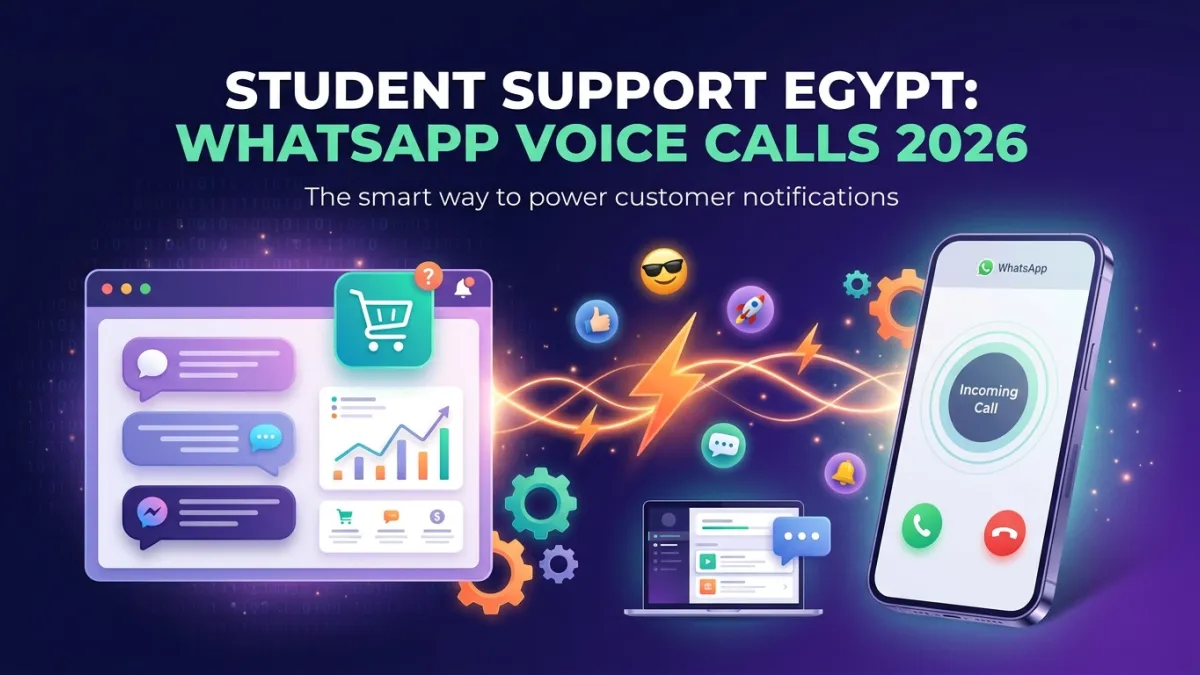
Can you imagine that over 90% of students in Egypt own smartphones, yet educational institutions still heavily rely on traditional channels that fail to keep pace with this widespread adoption for effective communication? This gap represents a significant challenge in providing student support, but at the same time, it's a golden opportunity for digital transformation. Amidst rapid technological advancements, text messages and emails are no longer sufficient to meet the needs of the current generation of students. They seek instant and personalized interaction, which makes WhatsApp voice calls a revolutionary solution in the Egyptian education sector.
Challenges of Student Support in the Egyptian Educational Landscape
The education sector in Egypt faces increasing challenges in providing effective and comprehensive student support. With the growing number of students enrolling in schools and universities, traditional systems become burdensome and unable to meet the diverse needs of students and parents. Conventional support channels, such as overcrowded hotlines or student affairs offices requiring in-person visits, often lead to significant delays and frustration for everyone involved.
These challenges include the inability to access support outside official working hours, difficulty in quickly obtaining accurate and up-to-date information, and a lack of personalized communication that can make a significant difference in a student's educational experience. Furthermore, the high operational cost of traditional call centers places a burden on educational institutions' budgets, limiting their ability to expand and improve the quality of services provided.
All these factors negatively impact student satisfaction, reduce their academic effectiveness, and may push them to seek institutions that offer a better support experience. Therefore, it has become essential to adopt innovative solutions that leverage available technology to provide student support more efficiently and effectively.
WhatsApp Voice Calls: A Bridge for Effective Student Support Communication
In an environment where WhatsApp usage is rapidly increasing among Egyptian youth, WhatsApp voice calls represent an invaluable opportunity for the education sector. They are not just a communication tool; they are a gateway to a personalized and direct support experience that transcends the boundaries of time and place. Students and parents prefer to communicate via WhatsApp because it's familiar, easy to use, and virtually free for them, which lowers communication barriers.
Platforms like LetsBot enable educational institutions to integrate WhatsApp voice calls for business into a comprehensive support system. This means that institutions can receive voice calls on their official WhatsApp numbers, which are answered through LetsBot's web and mobile applications (iOS and Android). It's not just about answering; it also includes automatic call recording and routing to the specialized support team, ensuring no inquiry is lost and facilitating follow-up.
Imagine a student needing urgent help with an exam schedule or registration details; they can simply make a WhatsApp voice call and be answered by a knowledgeable support representative, with the call recorded for later reference. This level of convenience and efficiency radically elevates the quality of student support and contributes to building a stronger, more trusting relationship between the institution and its students.
LetsBot Platform: Integrated Solutions for Student Support in the Education Sector
The LetsBot platform goes beyond merely offering WhatsApp voice calls to provide a comprehensive ecosystem specifically designed to meet the complex needs of student support. Through its shared team inbox, educational institutions can manage all student conversations across multiple channels — WhatsApp, Instagram DMs, Facebook Messenger, Telegram, and even email — all from a single location. This ensures conversations are not scattered and makes it easier for the support team to provide quick and consistent responses.
The platform includes powerful features that enhance support efficiency:
- Ticketing System and Service Level Agreements (SLAs): The team can create numbered tickets from any conversation, prioritize and assign statuses, and set time-bound goals for response and resolution. This ensures no inquiry is overlooked and helps continuously track and improve performance. Educational institutions can utilize the ticketing system and SLAs to track complex student inquiries.
- Appointment Booking from Chat: Students can book appointments with academic advisors, student counselors, or even teachers directly through the chat. The platform defines available services, staff working hours, and prevents double bookings, greatly simplifying the appointment scheduling process.
- Departments and Conversation Routing: Student conversations can be routed based on channel, language, keywords, or even agent skills. This ensures that student inquiries reach the right person on the team, reducing waiting times and increasing support effectiveness.
- Team Tasks and Reminders: Tasks can be created directly from any chat message and assigned to team members with due dates. This ensures all necessary actions for providing student support are followed up on, from replying to an inquiry to sending specific documents.
Additionally, LetsBot provides advanced security options for team accounts, such as two-factor authentication and IP restrictions on login, to ensure the protection of student and institutional data. All these tools work together to enable educational institutions to deliver an exceptional support experience, characterized by speed, efficiency, and the personal touch that students seek.
Enhancing Student Support with AI Tools and Bots
Integrating AI and bots into the student support ecosystem via WhatsApp represents a paradigm shift in the education sector. It's not limited to merely answering repetitive inquiries; it extends to providing proactive and personalized 24/7 support. The LetsBot platform enables educational institutions to leverage these technologies to enhance their student experience.
With the AI WhatsApp Bot Builder, institutions can easily build interactive chatbots using a drag-and-drop interface. These bots can answer frequently asked questions about registration, tuition fees, curricula, or even direct students to the correct resources. AI drafts conversation flows from natural language descriptions, adding buttons and lists to facilitate interaction, and can be tested directly before deployment.
LetsBot can also be integrated with advanced AI assistants like ChatGPT and Claude. These connectors allow AI to read conversations, draft responses, summarize chats, and even analyze communication campaigns. For example, Claude can summarize a long voice call with a student or analyze the effectiveness of a mass messaging campaign aimed at new students, providing the support team with valuable insights and reducing manual burdens. These capabilities ensure that support is always available, even outside official working hours, and that complex student inquiries are efficiently routed to human agents, freeing up their time to focus on cases requiring genuine human intervention.
Strategies for Efficiently Implementing WhatsApp Calls for Student Support
To maximize the benefits of WhatsApp voice calls for student support, educational institutions must adopt a clear and well-thought-out strategy. Here are some key points:
- Train the Support Team: Staff must be trained to effectively use the LetsBot platform, how to handle WhatsApp voice calls, route them, record notes, and leverage available AI tools.
- Define Working Hours and Routing Rules: Set clear operating hours for the voice support service and use LetsBot's conversation routing features to ensure calls reach the appropriate departments or staff based on the type of inquiry.
- Leverage Bots for Initial Responses: Use WhatsApp bots to answer frequently asked questions and provide basic information before transferring the call to a human agent, which saves team time and improves response speed.
- Monitor Performance and Analyze Data: Use LetsBot reports to monitor support team performance, response times, student satisfaction, and the most common types of inquiries. This helps identify strengths and weaknesses and continuously improve the service.
- Adhere to WhatsApp Policies: Ensure all communication, whether voice or text, complies with WhatsApp policies, especially regarding the 24-hour response window for student messages and the use of approved message templates for proactive outreach.
By implementing these strategies, educational institutions in Egypt can transform their approach to student support, making it more efficient, personalized, and tailored to the needs of the digital generation. This not only increases student satisfaction but also enhances the institution's reputation and attracts more prospective students.