
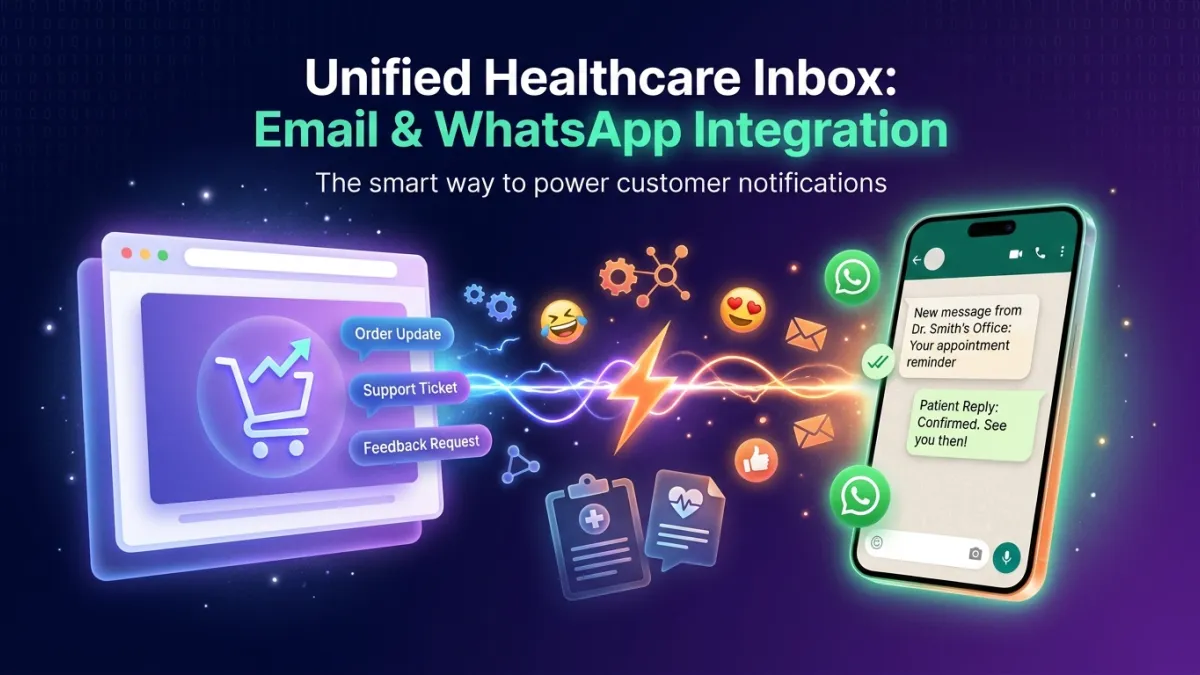
Have you ever felt frustrated by fragmented communication channels in a healthcare facility? Unanswered phone calls, piling up emails, and WhatsApp inquiries getting lost in the clutter of individual chats. In a vital sector like healthcare, where every second counts, this fragmentation can be a significant barrier to providing excellent patient service. Imagine a world where all these channels converge in one place, allowing your team to respond quickly and efficiently, and deliver a seamless patient experience. This is precisely what a unified inbox offers.
Communication Challenges in the Saudi Healthcare Sector
In Saudi Arabia, the healthcare sector is experiencing remarkable growth and development, and with it, patient expectations for fast and efficient service are increasing. However, many medical facilities still face significant challenges in managing incoming and outgoing messages. Communication typically occurs across multiple channels: phone for urgent appointments, email for reports and documents, and WhatsApp for quick inquiries. This multiplicity creates a fragmented work environment leading to several issues:
- Delayed Response Times: Staff may not see incoming messages immediately if they are distributed across different platforms, leading to critical delays in responding to patient inquiries or appointment requests.
- Loss of Information: Important patient details or specific case information can easily get lost when there isn't a central record of all interactions.
- Staff Burnout: Constantly switching between applications and platforms requires additional effort from employees, affecting their productivity and increasing the likelihood of errors.
- Poor Patient Experience: When patients have to repeat their information every time they communicate through a different channel, they feel frustrated and perceive the service as inefficient.
These challenges not only affect internal operational efficiency but also negatively impact patient satisfaction and the medical facility's reputation in a competitive market.
What is a Unified Inbox and Why is it Essential for Healthcare?
A unified inbox is a technological solution that consolidates all your facility's digital communication channels into one integrated interface. Instead of logging into separate applications to respond to WhatsApp messages, check emails, or manage Instagram messages, a unified inbox allows you to view and manage all these conversations from a single location. For the healthcare sector, this is not just a luxury but an absolute necessity to enhance patient experience and operational efficiency.
Using a platform like LetsBot, healthcare facilities in Saudi Arabia can integrate the following communication channels into a comprehensive unified inbox:
- WhatsApp Business API: For secure and effective communication with patients, sending appointment notifications, medication reminders, and responding to inquiries.
- Email: To integrate incoming and outgoing emails with conversations from other channels, ensuring no important message is missed.
- Instagram Direct Messages (DMs): To manage patient inquiries originating from social media.
- Facebook Messenger: To interact with patients who prefer this channel.
- Telegram: To serve a segment of patients who use Telegram as their primary communication channel.
- WhatsApp Voice Calls: Where incoming calls to official WhatsApp numbers can be answered directly from the unified inbox and recorded.
This comprehensive integration ensures your team is always up-to-date with all patient interactions, reducing response times, improving service quality, and building trust. It also makes it easier for new employees to onboard thanks to the unified interface, which doesn't require complex training on multiple systems.
How LetsBot Enhances Patient Experience and Operational Efficiency?
LetsBot offers a suite of features specifically designed to meet the needs of the healthcare sector, transforming the unified inbox from a mere message management tool into a comprehensive platform for enhancing patient experience and streamlining operations. By integrating multiple channels like WhatsApp, Instagram, Messenger, Telegram, and email, LetsBot ensures no message is missed.
- Multi-Agent Live Chat: Several team members can respond to patient inquiries simultaneously, with the ability to seamlessly transfer conversations between different departments (e.g., appointments, laboratory, insurance). This reduces waiting times and increases patient satisfaction.
- AI-Powered Bot Builder: Using an easy drag-and-drop bot builder, medical facilities can create WhatsApp bots to instantly answer frequently asked questions, such as operating hours, required documents, or directing patients to the correct department. AI can even draft conversation flows based on a simple natural language description.
- In-Conversation Appointment Booking: Patients can book their appointments directly through the conversation, where the bot sends available times and confirms the booking, preventing double bookings and sending optional patient reminders. This saves valuable time for both staff and patients.
- Ticketing System and SLA Goals: The team can create numbered support tickets from any conversation, assign priorities and statuses, and set goals for first response and resolution times during business hours. This ensures no important inquiry is overlooked and helps track performance.
Integrating AI and Automation for Advanced Healthcare Service
In the modern healthcare world, AI is no longer just a futuristic concept; it has become an essential tool for enhancing efficiency and providing better patient care. LetsBot integrates AI and automation technologies to elevate the level of customer service in the medical sector. Thanks to our integration with powerful assistants like ChatGPT and Claude, medical facilities can leverage advanced analytical and generative capabilities.
These AI connectors can read conversations, draft suggested responses, summarize lengthy chats, and analyze marketing campaigns to provide valuable insights. For example, AI can quickly summarize a patient's conversation history for a new staff member taking over a case, saving time and ensuring service continuity. It can also assist in drafting accurate responses to frequently asked medical inquiries, with human oversight to ensure the precision and sensitivity required in healthcare.
Additionally, automation in LetsBot enables the efficient execution of routine tasks:
- Bulk Messaging Campaigns: Sending health notifications, periodic check-up offers, or information about awareness campaigns to targeted patients via WhatsApp. LetsBot Pro campaigns include recurring campaigns, A/B testing, and retargeting based on reads, replies, or clicks.
- Order Status Notifications: If the facility is a pharmacy or medical supplies store, automatic updates on the status of medication or product orders can be sent.
- Customer Satisfaction Surveys (CSAT, NPS, CES): After a conversation ends, automated surveys can be sent to collect patient feedback on service quality. These surveys allow the facility to continuously measure patient satisfaction and identify areas for improvement. Results are sent to each agent, team, and channel, with alerts to staff in case of low scores, all within the 24-hour window.
These tools not only reduce the operational burden on staff but also ensure patients receive accurate and timely information, boosting their trust in the facility. To learn more about integrating AI into customer service, you can refer to the AI WhatsApp Bot Guide 2026.
Security and Privacy: A Top Priority in Healthcare Unified Inbox
In the healthcare sector, patient data privacy and security are non-negotiable matters. Handling sensitive health information requires the highest levels of protection and adherence to strict standards. LetsBot understands this importance and provides robust security features to ensure the protection of patient and medical facility data.
As an official Meta Business Partner, LetsBot relies on the official WhatsApp Business API, which provides end-to-end encryption for all messages, ensuring that conversations between patients and the facility remain private and protected. Additionally, the platform offers a range of account-level security controls:
- Two-Factor Authentication (2FA): Requires users to provide two forms of verification before accessing the account, adding an extra layer of security.
- Session Timeout: Automatically logs out users after a period of inactivity, reducing the risk of unauthorized access if a device is left unattended.
- Security Activity Log: Records all significant activities within the account, providing a clear audit trail for any changes or access.
- IP Restrictions on Login: Allows facilities to restrict team members' logins to specific IP addresses, preventing access from unauthorized locations.
These features ensure that the unified inbox is not only efficient but also completely secure, giving medical facilities peace of mind that their patients' data is in safe hands. Adherence to high security standards helps facilities build trust with patients and comply with any regulatory requirements related to data privacy.