
Did you know that 70% of customers in Saudi Arabia expect a personalized shopping experience, and 80% prefer stores that offer it? In the fast-paced world of e-commerce, simply selling products is no longer enough. Customer personalization has become the key to loyalty and increased sales, especially with the fierce competition in the Saudi market. This is where WhatsApp API for business comes in as a revolutionary tool, enabling companies to exceed expectations and deliver unique experiences to each customer individually, paving the way for unprecedented growth in 2026 and beyond.
In this comprehensive guide, we'll explore how WhatsApp API can transform your customer interactions in Saudi Arabia, from the initial discovery phase to post-purchase engagement. We'll delve into advanced strategies, available tools, and how to build strong, sustainable relationships that foster loyalty and drive growth for your business.
Why Customer Personalization via WhatsApp API is the Future in Saudi Arabia?
In the Saudi digital landscape, where over 90% of the population uses the internet and individuals spend more than 3 hours daily on social media, direct communication channels like WhatsApp have become the primary arena for interaction. Generic messages sent to everyone with the same content are no longer effective. Today's customers expect brands to understand them, their needs, and to communicate in their preferred language and according to their specific preferences.
The shift towards personalization is not just a luxury; it's a competitive necessity. Research indicates that companies investing in personalization achieve 5-15% faster revenue growth and increase customer loyalty by 10-15%. By using the official WhatsApp Business API, e-commerce businesses in Saudi Arabia can leverage these statistics and turn them into tangible results, delivering unforgettable customer experiences that build trust and drive sales.
Challenges of Traditional E-commerce and WhatsApp API Solutions
- Ineffective Communication: Traditional stores often rely on email or SMS, which suffer from low open and engagement rates. WhatsApp, with its open rates exceeding 90%, ensures your messages are delivered and read.
- Lack of Personalization: Difficulty sending personalized messages at scale without robust infrastructure. WhatsApp API provides the ability to send personalized message campaigns widely, integrating customer data to deliver relevant content.
- Slow Customer Service: Long wait times for customers on the phone or via email lead to frustration and lost sales. WhatsApp API enables instant and efficient customer service through live chat and AI chatbots.
- High Cart Abandonment Rates: Approximately 70% of shoppers leave their carts full without completing a purchase. Through personalized cart recovery messages via WhatsApp, this percentage can be significantly reduced.
Building a Personalized Customer Experience with WhatsApp API for Business
Effective personalization goes beyond merely mentioning the customer's name in a message. It's about understanding the entire customer journey, anticipating their needs, and providing solutions at the right time and through their preferred channel. With WhatsApp API for business, you can achieve this through several key areas:
1. Automating Interactive and Personalized Messages
Imagine a customer browsing your products, adding some to their cart, and then leaving. Instead of letting them go, you can send them a personalized WhatsApp message shortly after, reminding them of the products they showed interest in, perhaps offering a special discount, or helping answer their inquiries. This type of automation not only boosts conversions but also builds a sense of care.
- Abandoned Cart Recovery: Send automated reminders containing the products the customer left behind, with the option to add an incentive to complete the purchase.
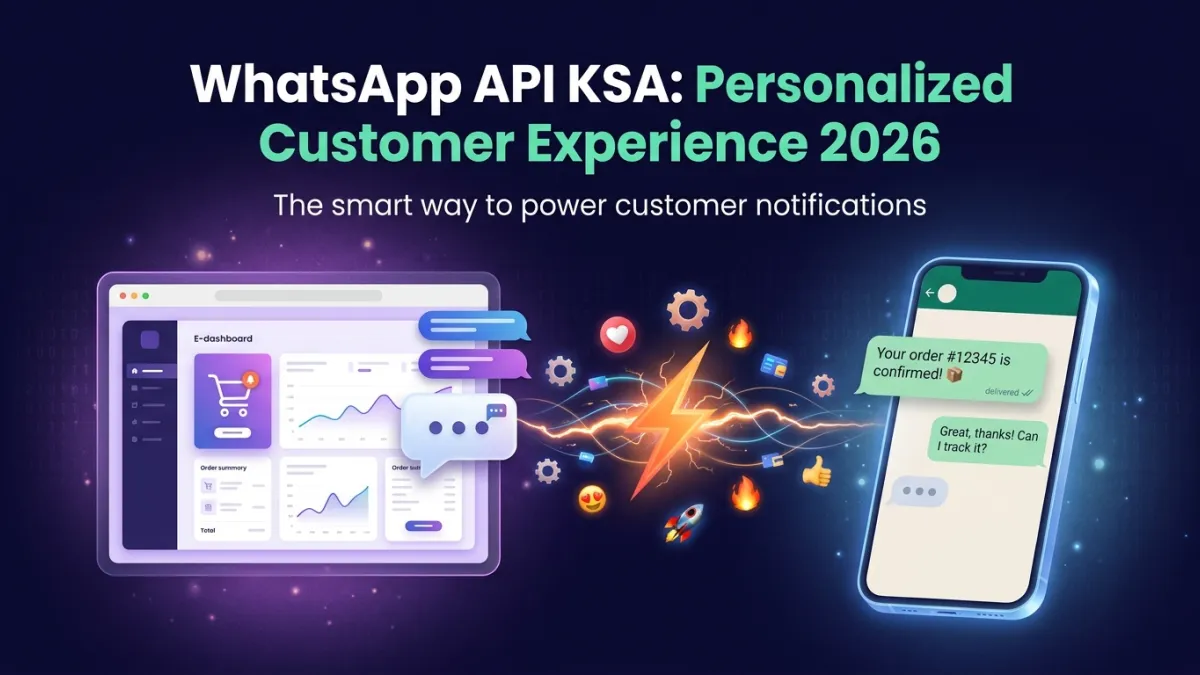
- Order Status Updates: Inform the customer of every step in their order journey, from confirmation to delivery, reducing customer service inquiries and increasing customer satisfaction.
- Payment Confirmations and OTP Codes: Use WhatsApp to send instant payment confirmations and One-Time Password (OTP) verification codes, enhancing security and peace of mind.
- Personalized Product Recommendations: Based on purchase or browsing history, AI chatbots can suggest relevant products, increasing cross-selling and upselling opportunities.
2. System Integration for a Seamless Customer Journey
The power of WhatsApp API for business lies in its ability to seamlessly integrate with your existing e-commerce and Customer Relationship Management (CRM) systems. This integration allows for real-time data exchange, enabling highly personalized messages based on customer behavior and preferences.
- E-commerce Store Integration: Connecting WhatsApp API with platforms like Salla, Zid, WooCommerce, or Magento enables automatic synchronization of customer and order data, facilitating automation and personalization.
- CRM System Integration: Integration with HubSpot or Pipedrive ensures all customer interactions are centralized, giving your team a comprehensive view of each customer and enabling them to provide better, more personalized support.
- Payment Gateways: Stripe and PayTabs integration facilitates sending secure payment links directly via WhatsApp, simplifying the purchase process and increasing conversion rates.
AI and WhatsApp Bots: A Leap Forward in Personalization
We cannot discuss personalization in 2026 without mentioning the role of Artificial Intelligence. AI-powered WhatsApp bots are no longer just tools for answering frequently asked questions; they have become personal assistants that can understand context, analyze sentiment, and provide highly customized answers and recommendations. This represents a radical shift in how businesses interact with their customers in Saudi Arabia.
How AI Enhances Personalization?
- Natural Language Understanding (NLU): AI bots can comprehend complex customer inquiries in their natural language, enabling them to provide accurate and helpful answers without human intervention.
- Continuous Learning: The more bots interact with customers, the more they learn about their behavior patterns and preferences, improving the quality of personalization over time.
- Dynamic Recommendations: Based on data collected by the bot from customer interactions and purchase history, it can provide personalized product and service recommendations in real-time.
- Intelligent Escalation: When a bot encounters a question requiring human intervention, it can seamlessly transfer the conversation to a customer service agent, providing them with the full chat history to ensure a continuous personalized experience.
The LetsBot platform utilizes an AI-powered bot builder, where you can describe the bot's flow in natural language, and the AI will draft the initial flow with buttons and menus. Our platform also allows for the integration of ChatGPT and Claude to analyze conversations, summarize chats, and optimize your marketing campaigns to deliver a more personalized experience. For more details, you can refer to the AI WhatsApp Bot Guide 2026.
Measuring Success and Optimizing Personalization
To ensure your WhatsApp API for business strategies achieve their goals in Saudi Arabia, it's essential to regularly measure performance and optimize based on data. Personalization is not a one-time process; it's a continuous cycle of testing and improvement.
Key Success Metrics
- Conversion Rate: Track the number of customers who completed a purchase after interacting with personalized WhatsApp messages.
- Customer Retention Rate: Measure the number of customers who return to make repeat purchases after receiving personalized messages.
- Average Order Value (AOV): Do personalized recommendations lead to an increase in purchase volume?
- Customer Satisfaction (CSAT/NPS): Collect feedback from customers about their experience with personalized communication via WhatsApp.
- Customer Acquisition Cost (CAC): Does personalization reduce the cost of acquiring new customers by improving efficiency?
The LetsBot platform provides powerful analytical tools to help you track these metrics. You can also use our WhatsApp ROI Calculator to estimate the return on investment from using WhatsApp API in your business operations.
Compliance and Security
When dealing with customer data, security and compliance with regulatory standards are paramount. LetsBot adheres to the highest security and privacy standards, including compliance with regional regulations like CITC in Saudi Arabia, in addition to providing advanced security features such as two-factor authentication and tamper-proof activity logs. This ensures your customer data is secure and your operations comply with local and international laws.
| Feature | Traditional Communication (Email/SMS) | WhatsApp API (LetsBot Platform) |
|---|---|---|
| Open Rate | 20-30% (Email), 40-50% (SMS) | Over 90% |
| Personalization Level | Limited, often requires manual effort | Very High, powered by AI and data integration |
| Interactivity | Low, one-way messages | High, two-way chat, buttons, lists, voice calls |
| Customer Service | Slow, disconnected information | Instant, centralized (unified inbox), supported by bots and agents |
| System Integration | Moderate, may require complex development | Comprehensive (Salla, Zid, WooCommerce, CRM, Payment Gateways) |
| Cart Recovery | Low conversion rate | High conversion rate thanks to instant and personalized messages |