
Did you know that over 70% of shopping carts are abandoned before purchase in e-commerce, and a significant portion of this loss can be recovered through effective communication? In the competitive world of e-commerce, where customers expect instant and personalized responses, merely showcasing products is no longer enough. Building a sales pipeline through customers' preferred communication channels has become vital, and WhatsApp stands at the forefront of these channels, especially in markets like the United Arab Emirates.
Converting a visitor into a customer, and then into a loyal customer, requires a clear and organized strategy. This is the essence of a sales pipeline: a carefully planned journey that guides potential customers through every stage, from initial interest to completing a purchase and beyond. So, how can you harness the power of WhatsApp to create a seamless and effective sales pipeline that doubles your e-commerce store's profits? Let's explore the five essential steps.
Why WhatsApp is the Cornerstone of Your E-commerce Sales Pipeline?
In today's digital landscape, WhatsApp is no longer just a personal chat app; it has transformed into a powerful and indispensable business tool, especially in the Gulf region. The number of WhatsApp users in the UAE exceeds 90% of internet users, making it an ideal channel for direct and personalized communication with customers. Unlike email or cold calls, WhatsApp boasts significantly higher open, read, and response rates, creating a fertile environment for the growth of your store's sales pipeline.
The ability to reach customers at their preferred time and place, provide instant support, answer inquiries, and even close deals, places WhatsApp at the heart of any modern e-commerce strategy. This proximity allows you to build stronger customer relationships, better understand their needs, and offer customized shopping experiences that increase the likelihood of conversion and loyalty.
5 Steps to Build an Effective Sales Pipeline via WhatsApp
Step One: Attracting and Qualifying Leads
The journey of any effective sales pipeline begins by attracting the right potential customers. In an e-commerce environment, this can be achieved through multiple channels, such as Click-to-WhatsApp ads on Facebook and Instagram, or WhatsApp buttons on your website and product pages. Once a potential customer starts a conversation, it's time to qualify them.
- Click-to-WhatsApp Ads: Make it easy for potential customers to start a conversation with you directly from your ads.
- Smart WhatsApp Bot: Use AI-powered chatbots from Let's Bot to ask essential qualifying questions, such as the customer's interests, budget, or the type of products they are looking for. This helps filter customers and direct qualified conversations to the sales team.
- Initial Data Collection: Use the bot to gather basic information like name and email, enriching the customer's profile in your system.
Step Two: Presenting Products and Offering Personalized Consultations
Once a potential customer is qualified, it's time to present your products in an attractive and compelling way. WhatsApp allows you to go beyond mere text, enabling you to send high-quality images, product videos, catalogs, and even custom quotes. Here, the sales team can play a crucial role in providing personalized consultations, answering complex questions, and offering recommendations based on the customer's specific needs.
- Direct Conversations: Allow your customers to interact directly with sales agents for personalized consultations and to clarify any product details.
- Rich Media Sharing: Leverage WhatsApp's ability to send images, videos, and files to provide a comprehensive product viewing experience.
- Customized Recommendations: Based on qualification information, offer product recommendations that perfectly match the customer's interests, increasing sales opportunities.
Step Three: Handling Objections and Building Trust
A purchase rarely happens without some questions or objections. This stage is crucial in the sales pipeline, as your team must be prepared to address concerns and build trust. Objections can be about price, product quality, return policy, or even delivery time. Effectively using the WhatsApp Live Chat Guide ensures quick and professional responses.
- Quick Responses: Prepare quick responses for common questions and objections to save time and ensure consistency.
- Human Touch: For complex objections, there should be an option to transfer to a human agent to provide a more detailed and empathetic response.
- Highlight Guarantees: Share information about product warranties, return policies, or positive customer reviews to boost confidence.
Step Four: Closing the Sale and Facilitating Payment
This is the stage where a potential customer transforms into an actual customer. The sales completion process should be as seamless as possible. WhatsApp can play a pivotal role in this by providing easy and direct payment options and sending order confirmations.
- Direct Payment Links: Send secure payment links directly via WhatsApp (such as Stripe or PayTabs integration) to simplify the purchase process.
- Order Confirmation: Send instant order confirmation and details via WhatsApp, reassuring the customer and reducing post-purchase inquiries.
- Abandoned Cart Recovery: Use automated WhatsApp messages to remind customers about abandoned carts and offer incentives to complete their purchase.
Step Five: Post-Sale Follow-up and Building Loyalty
The sales pipeline doesn't end with a completed purchase; it's the beginning of a long-term relationship. Post-sale follow-up is essential for building customer loyalty and encouraging repeat purchases. WhatsApp can be an excellent channel for this.
- Order Status Updates: Send automated updates regarding order shipping and delivery.
- Customer Satisfaction Surveys: After conversation completion or delivery, send CSAT or NPS surveys to gather feedback and improve service.
- Retargeting Campaigns: Use the WhatsApp Marketing Guide to organize personalized messaging campaigns for previous customers, informing them about new products or special offers, thus encouraging repeat purchases.
Let's Bot: Your Integrated Platform for Deal Management and WhatsApp Sales Pipeline
Implementing these steps manually can be exhausting and time-consuming. This is where the Let's Bot platform comes in, providing you with the necessary tools to automate and organize every stage of your sales pipeline across WhatsApp and other channels. Let's Bot is a verified Meta Tech Provider, supporting the official WhatsApp Business API, in addition to integrating Instagram messages, Facebook Messenger, Telegram, and email messages into a single, shared team inbox.
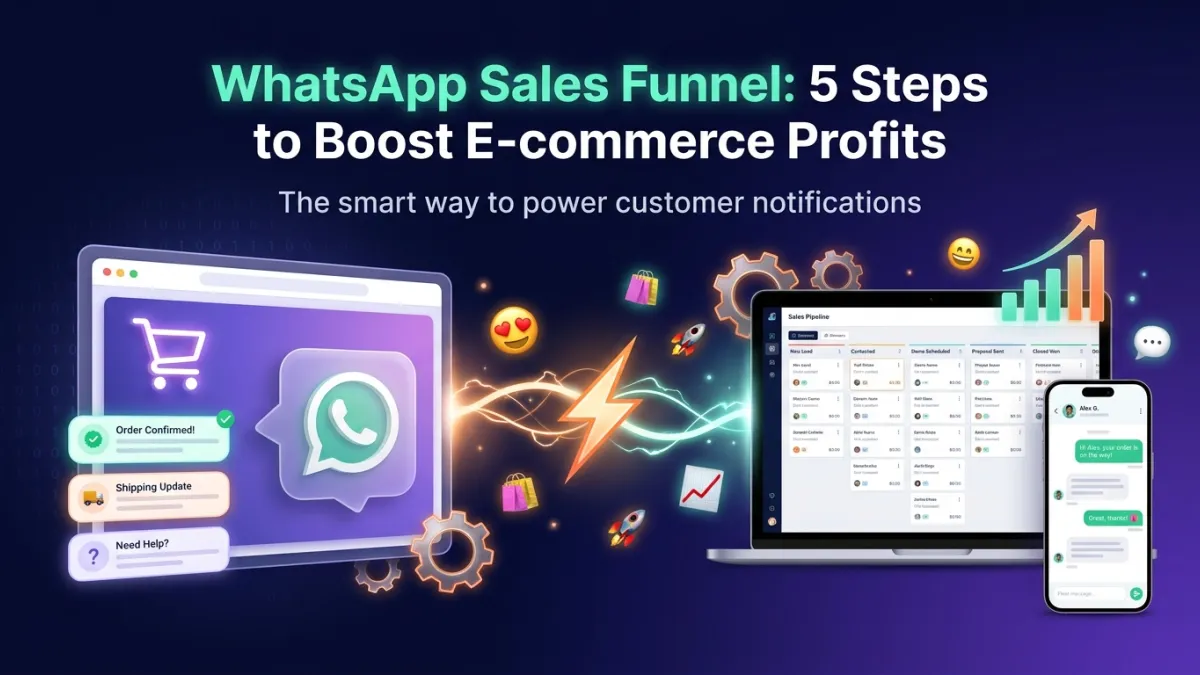
One of Let's Bot's most prominent features directly supporting deal management is the integrated "Deals Pipeline" feature. This feature transforms the sales tracking process into a visual, organized, and efficient experience, helping your team focus on the most valuable opportunities.
How Does Let's Bot's Deals Pipeline Feature Work?
The Deals Pipeline feature in Let's Bot is designed to simplify and clarify each potential customer's journey towards purchase. It's an interactive Kanban board that allows you and your team members to easily track deals from one stage to another. You can create and update deals directly from the customer profile within the live chat, ensuring all relevant information is at your fingertips.
- Visual Kanban Board: See all your deals organized by different stages (e.g., Lead, Qualified, Quote, Negotiation, Won/Lost).
- Deal Amounts and Total per Stage: Assign an amount to each deal and view the cumulative total of amounts in each stage, giving you clear visibility into the ongoing workload.
- Win Probability per Stage: You can assign a win probability percentage to each stage of the pipeline. For example, the win probability in the "Quote" stage might be 50%, while in the "Final Negotiation" stage it could be 80%.
- Weighted Forecast: Based on the deal amount and the win probability in its current stage, the system calculates a weighted forecast for expected revenue, aiding in planning and strategic decision-making.
- Win/Loss Tracking: Record the reason for winning or losing each deal, providing valuable data for performance analysis and improving future sales strategies.
Additionally, Let's Bot allows you to leverage powerful integrations with e-commerce platforms like Salla, Zid, WooCommerce, and Magento, and with CRM systems such as HubSpot and Pipedrive. These integrations ensure seamless data flow and a unified customer experience across all touchpoints. For more details on this feature, you can visit the Deals and Sales Pipeline in Let's Bot page.
Achieved Benefits from WhatsApp Sales Pipeline with Let's Bot
Integrating an organized sales pipeline with the power of WhatsApp and the Let's Bot platform brings numerous benefits to your e-commerce store in the UAE and beyond:
- Increased Conversion Rates: Personalized and organized communication reduces response time and increases the chances of closing sales.
- Improved Customer Experience: Customers receive the information and support they need instantly, enhancing their satisfaction and loyalty.
- Sales Team Efficiency: The Kanban board for the Deals Pipeline gives your team clear visibility into their priorities and helps them manage their time effectively.
- Accurate Sales Forecasts: Thanks to the weighted forecast feature, you can get more precise estimates of future revenue, supporting financial planning.
- Identify Weaknesses: Analyzing win and loss reasons helps you identify weaknesses in your sales pipeline and continuously improve them.
- Cost Savings: Automating repetitive tasks and routing customers via bots reduces the need for constant human intervention, saving on customer service costs.
The advantage is not limited to sales only but extends to customer service and post-sale follow-up, ensuring a complete and effective customer lifecycle. You can also use the WhatsApp ROI Calculator to estimate the return on investment you can achieve by using WhatsApp in your business operations.