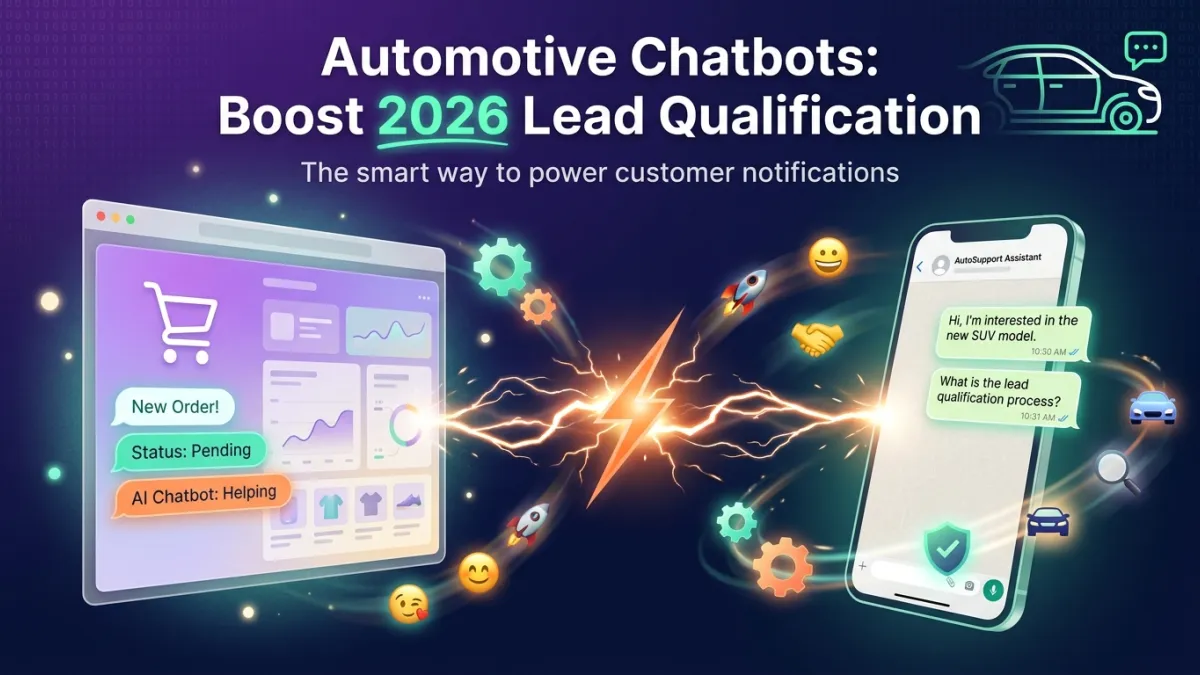
Did you know that over 50% of potential customers who don't receive a response within one hour move on to a competitor? In the highly competitive automotive sector, where buyers make decisions quickly, losing a potential customer due to slow response times or inefficient qualification processes is an unbearable loss. This is where a car chatbot comes in, not just for quick responses, but for transforming every inquiry into a genuine, qualified sales opportunity. In 2026, a chatbot is no longer a luxury; it's a strategic necessity to accelerate lead qualification and gain a crucial competitive edge.
Challenges in Automotive Lead Qualification
The automotive industry is complex, and its sales process requires significant interaction and information. Car dealerships and retailers face substantial challenges in managing the influx of potential customers and qualifying them effectively. These challenges not only impact sales efficiency but also waste valuable resources and lead to lost opportunities.
- Slow Response Times: Sales teams often take too long to respond to initial inquiries, prompting customers to look for alternatives.
- Inefficient Qualification: Spending excessive time dealing with unqualified leads wastes sales team efforts and reduces their productivity.
- Lack of Information: Difficulty in gathering accurate and complete information about a customer's interests, budget, and needs in a timely manner.
- Limited Availability: Customers expect 24/7 support, which is challenging to achieve with human resources alone.
- Inconsistent Customer Experience: A lack of standardized response and inquiry processes can lead to inconsistent and frustrating customer experiences.
These challenges demand an innovative solution that combines speed, efficiency, and personalization—precisely what an advanced car chatbot delivers.
How a Car Chatbot Changes the Game in 2026
With the evolution of AI technologies, chatbots have become smarter and more capable of understanding conversation context and delivering personalized responses. For the automotive sector, this means a radical transformation in how potential customers are engaged.
Instant Response and 24/7 Lead Qualification
A car chatbot allows you to respond instantly to any inquiry, anytime, anywhere. Whether a customer is asking about a specific model, requesting to schedule a test drive, or inquiring about financing options, the bot can provide the necessary information and guide the customer through the initial qualification process. This ensures no potential lead is lost due to delays and significantly boosts customer satisfaction.
Personalized Experience and Smart Data Collection
Thanks to AI capabilities, the bot can ask intelligent questions to precisely understand a customer's needs. Are they looking for a family car or a sports car? What is their budget? Do they prefer a new or used vehicle? The bot can systematically collect this data and directly record it in your Customer Relationship Management (CRM) system like HubSpot or Pipedrive, providing your sales team with valuable insights even before a human conversation begins. This personalization not only saves time but also builds a stronger relationship with the customer.
Appointment Scheduling and Customer Reminders
The bot's role isn't limited to answering inquiries; it can also schedule test drives, maintenance appointments, or showroom visits directly via WhatsApp. The bot confirms the appointment and sends automatic reminders, reducing no-show rates and ensuring a smooth flow of operational processes. This type of automation frees up your team to focus on more complex tasks.
LetsBot Features Tailored for the Automotive Sector
LetsBot, as an official Meta Business Partner, offers a comprehensive and robust solution that enables car dealerships to maximize the benefits of the WhatsApp Business API, focusing on features specifically serving the automotive industry.
- Official WhatsApp Business API: We guarantee your use of the official WhatsApp Business API, providing unparalleled reliability and security, protecting you from the risks of account bans.
- Advanced AI Chatbot: You can train the bot on your vehicle data, models, and special offers to provide accurate and comprehensive answers. The bot also supports integration with ChatGPT to enhance its natural language understanding capabilities.
- Multi-Agent Inbox (Live Chat): When a customer requires human intervention, the bot can seamlessly transfer the conversation to a sales agent in a shared inbox, ensuring a continuous experience without interruption.
- Automated Abandoned Cart Recovery: For customers browsing accessories or spare parts on your website, the bot can send smart reminders to complete their purchase, thereby increasing conversion rates.
- Order/Maintenance Status Notifications: Send automatic updates to customers about the status of their vehicles in the workshop, parts availability, or delivery schedules.
- Powerful Integrations: Easily connect LetsBot with CRM systems like HubSpot and Pipedrive for effective lead management, and with e-commerce platforms like Salla, Zid, and WooCommerce for inventory and order management.
- 24/7 Arabic Customer Support: A specialized technical support team available around the clock to assist you at any time, with a deep understanding of regional market needs.
By utilizing these features, LetsBot can be the right-hand arm of your sales and marketing team, ensuring maximum utilization of every potential customer.
Building a Seamless Customer Journey: From Inquiry to Purchase
The effectiveness of a car chatbot lies in its ability to efficiently guide potential customers through the stages of the buying journey, from initial interest to closing the deal.
1. Discovering Initial Interest
A customer often begins their journey with a general question about a specific model, a request for a brochure, or an inquiry about new offers. Here, the chatbot responds instantly, provides the requested information, and asks basic qualifying questions such as "What type of car are you looking for?" or "Do you have a specific budget in mind?"
2. Qualifying the Customer and Offering Personalized Deals
Based on the customer's answers, the bot qualifies them as a hot lead. It can then present customized offers, such as specific financing packages, invite them for a test drive, or even offer comparisons between different models based on their preferences. This stage is crucial for building customer interest and deepening their engagement.
3. Scheduling and Confirming Appointments
When the customer is ready for the next step, whether it's a showroom visit or a test drive, the bot can help them schedule and confirm a suitable appointment. It can also send reminders before the appointment to ensure customer attendance, reducing no-shows and saving the sales team's time.
4. Post-Sale Follow-up and Support
The customer journey doesn't end with the purchase. The bot can follow up with customers after the sale to provide support, such as reminding them of periodic maintenance appointments, informing them about new offers on spare parts or accessories, or even collecting feedback on their experience, thereby enhancing loyalty and encouraging repeat business.
Measuring Success and Continuous Improvement
To ensure that a car chatbot achieves maximum impact, it's essential to regularly measure its performance and improve it based on data. The LetsBot platform provides analytical dashboards that enable you to track key metrics.
Key Performance Metrics:
- Initial Response Rate: How quickly the bot responds to inquiries.
- Lead Qualification Rate: The percentage of potential customers successfully qualified by the bot.
- Number of Appointments Scheduled: How many test drives or showroom visits were booked via the bot.
- Conversion Rate: The percentage of qualified leads who transition from bot interaction to an actual purchase.
- Customer Satisfaction: Can be measured through short surveys after interacting with the bot.
By monitoring these metrics, you can identify the strengths and weaknesses in the bot's performance, better train the AI, and optimize conversation flows to ensure the best results. The ability to adapt and continuously improve is key to success in the constantly evolving world of digital marketing.