
Have you ever felt that your WhatsApp conversations with customers in Egypt turn into a maze of forgotten promises and piled-up tasks? Amidst intense daily interactions, it can be challenging for a support team to track every request, every follow-up, and every inquiry that requires action. This challenge highlights the importance of effectively managing customer support team tasks to ensure service continuity and quality. With Egyptian businesses increasingly relying on WhatsApp as a primary means of customer communication, organizing these tasks has become a top priority to maintain brand reputation and customer satisfaction.
Neglecting to organize customer support tasks can lead to poor customer experiences, lost sales opportunities, and a decline in team efficiency. But what's the solution? In this article, we'll explore how integrated task management tools in platforms like LetsBot can revolutionize how support teams operate in Egypt, transforming chaos into order, and challenges into opportunities to enhance customer service in Egypt.
Why is Customer Support Task Management Essential in the Egyptian WhatsApp Environment?
Egypt is undergoing a rapid digital transformation, with WhatsApp becoming the preferred channel for millions for daily communication, including interactions with businesses. This widespread reliance means support teams receive an enormous influx of messages requiring diverse responses: from answering a simple inquiry to tracking a complex order or even scheduling maintenance. Without a clear system for managing customer support tasks, details can get lost, and responses can be delayed, negatively impacting the customer experience.
Imagine a scenario where a customer contacts an e-commerce store to ask about their order status, then requests an address change, and then inquires about another product. All these requests can turn into separate tasks requiring specific actions and meticulous follow-up. If these tasks aren't clearly recorded and assigned, it's very easy for a team member to forget a part of them, leading to customer frustration and a decline in the quality of customer service in Egypt. This is where advanced task management tools come into play, ensuring every interaction leads to a positive outcome.
How Do Tasks and Reminders Transform Conversations into Actionable Items?
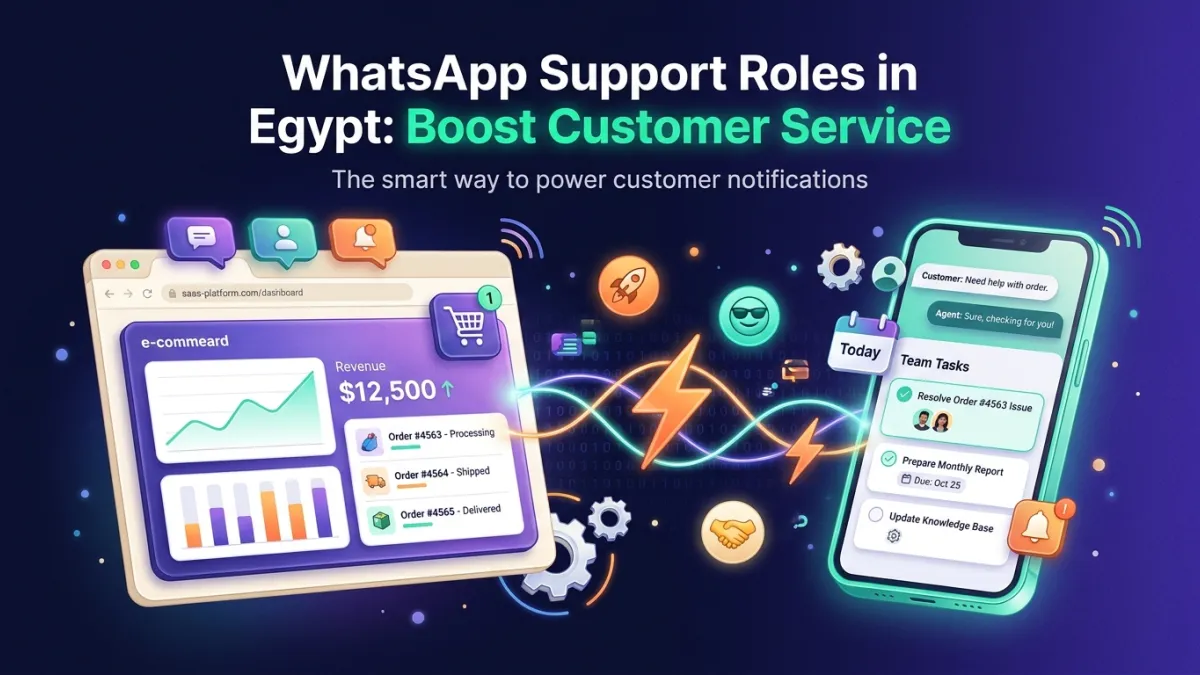
Platforms like LetsBot allow you to transform any message in a WhatsApp conversation into a trackable task with a click of a button. These tasks aren't just fleeting notes; they are organized items that can be assigned to a specific team member, given a deadline, and assigned a priority level. This ensures that every request or inquiry receives the necessary attention and is followed up until completion.
For example, if a customer requests a callback at a specific time, the support team can create a task "Call back Customer X" and assign it to the responsible employee with a specific date and time. The system sends internal app reminders (as a result of internal application notifications for the team) to the relevant employee to ensure the task isn't forgotten. These reminders arrive as notifications within the LetsBot mobile or web app, keeping the team focused on their tasks without bothering the customer with unwanted automated messages.
- Create Tasks from Conversation: Transform any message into an immediate task, preventing details from being forgotten.
- Assignment and Deadlines: Assign tasks to team members with a specific deadline and priority to ensure accountability.
- Visual Progress Tracking: View tasks in lists, Kanban boards, or calendars to easily track progress.
- Recurring Tasks: Set up tasks that repeat regularly, such as periodic follow-ups or inventory checks.
- Internal Reminders: Send in-app notifications to relevant employees to ensure no task is missed.
Direct Benefits for Customer Service in Egypt When Using a Task System
Implementing an effective customer support team task system brings a host of benefits that positively impact the quality of customer service in Egypt and the operational efficiency of businesses. These benefits extend beyond mere work organization, reaching into building stronger customer relationships and increasing brand loyalty.
Improved Response Speed and Accuracy
When tasks are clear and well-defined, the time spent understanding what needs to be done decreases. This leads to faster and more accurate responses to customer inquiries. Employees know exactly what is required of them and when, reducing confusion and generally improving the customer experience. The ability to add comments within a task also ensures that all team members are aware of the progress made and any additional details that may emerge.
Increased Customer Satisfaction and Loyalty
Customers appreciate businesses that keep their promises and provide consistent service. When no requests or follow-ups are lost thanks to a task system, customers feel valued and attended to. This boosts their trust in the brand and increases the likelihood of them returning to purchase again. For instance, the support team can book appointments directly from a conversation, then create a task to track the customer's readiness for the appointment, all contributing to an enhanced customer experience.
Enhanced Support Team Efficiency and Accountability
A task system provides clear visibility into each team member's performance. Managers can track the number of tasks assigned to each employee, their completion status, and the time taken. This not only helps in fair workload distribution but also enhances accountability and encourages employees to complete their tasks on time. Furthermore, employees can use the LetsBot mobile app to access and update their tasks on the go, increasing work flexibility.
Streamlined Workflow and Reduced Errors
By transforming complex interactions into simple, manageable steps, a task system reduces the chances of errors. The team can create recurring tasks for routine follow-ups or repetitive procedures, ensuring no crucial step is overlooked. This contributes to streamlining the workflow and makes the support process smoother and more efficient.
Integrating Tasks with a Comprehensive WhatsApp Strategy
Customer support team tasks do not operate in isolation from the other tools within the LetsBot platform. Rather, they are an integral part of a comprehensive strategy aimed at enhancing customer experience across WhatsApp and other channels. Tasks can complement live chat functions, AI integrations, and even marketing campaign management. For instance, after a live chat conversation with a customer ends, a task might be created for post-sale follow-up or to collect customer feedback.
Tasks can also be used to coordinate work between different departments. For example, if the support team receives a complex technical inquiry, a task can be created and assigned to the technical support team, with all original conversation details attached. This ensures a smooth transfer of information and prevents the customer from needing to repeat their information. Furthermore, integrating tasks with other tools like the WhatsApp Live Chat Guide ensures that every interaction is meticulously tracked.
Moreover, integrated AI tools such as the ChatGPT or Claude connector can help analyze and summarize long conversations, making it easier for team members to identify key tasks that need to be created. This ability to transform complex discussions into clear action points is a true competitive advantage for businesses striving to provide the best customer service in Egypt.
Best Practices for Effective Customer Support Task Management
To maximize the benefits of a customer support team task management system, it's crucial to adopt some best practices that ensure its efficient and effective use. These practices are not just about the tool itself, but about how it's integrated into the team's daily work culture.
- Clearly Define Priorities: The team should categorize tasks by priority (high, medium, low) to ensure the most urgent tasks are addressed first. This helps in managing time and resources effectively.
- Continuous Communication within Tasks: Use the comments feature within each task to share updates, ask questions, and ensure everyone is aware of the progress made. This reduces the need for emails or side conversations.
- Regular Task Review: Team members and managers should review task boards or lists daily or weekly to ensure no overdue or forgotten tasks exist. A Kanban board view can help quickly identify bottlenecks.
- Ongoing Team Training: Ensure all team members are well-trained on how to effectively use the task system, including how to create, assign, and update tasks.
- Leverage Reports and Analytics: Utilize available reports to analyze team performance in completing tasks, identify strengths and weaknesses, and improve future operations. This can help in better evaluating the WhatsApp ROI calculator.
By implementing these practices, Egyptian businesses can transform customer support team task management from merely a tool into a powerful engine for excellence in customer service, boosting both efficiency and satisfaction.